When Poverty Puts a Price on the Human Body: The Disturbing Rise of Kidney-for-Capital Desperation Among Nigerian Youths
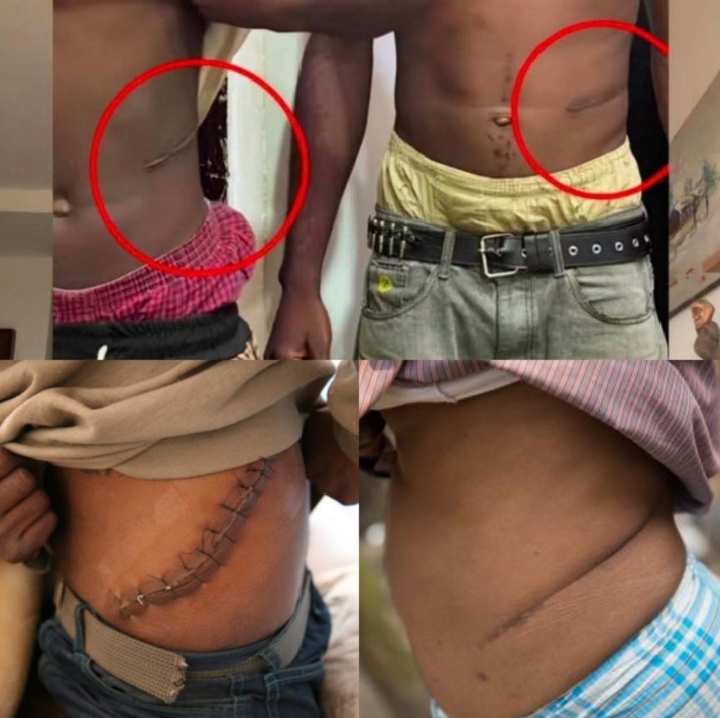
What happens when a young man’s biggest obstacle to becoming self-employed is not lack of skills, willingness to work or business ideas, but the absence of start-up capital?
For some vulnerable Nigerians, the answer appears to be becoming increasingly disturbing: turning to the human body itself as a source of quick money.
Reports of young Nigerians allegedly offering to sell their kidneys to raise money for business ventures have reignited concerns about the country’s underground organ trade and the economic pressures pushing vulnerable people towards potentially irreversible decisions.
The issue came into sharper focus following reports linking the sale of a kidney to the desire to raise money for an okada, with a figure of about N2 million reportedly involved.
But Global Mirror News considers the bigger story to be beyond the motorcycle.
It is about poverty, unemployment, financial exclusion and the dangerous market that emerges when desperate people meet individuals willing to exploit their desperation.
The disturbing calculation
For a young Nigerian without a stable income, owning a motorcycle can represent an opportunity to escape unemployment.
An okada can provide a daily source of income through passenger transportation, delivery services and other commercial activities. Unlike a formal job application, it does not necessarily require a university degree, years of experience or a lengthy recruitment process.
The major barrier is often capital.
That is where the disturbing calculation begins.
A young person may see a motorcycle worth millions of naira as an investment capable of generating income for years. An unscrupulous intermediary, meanwhile, may present the sale of a kidney as a quick way to raise the required money.
Global Mirror News gathered that the danger lies in the fact that the individual making such a decision may focus almost entirely on the immediate financial benefit while underestimating the lifelong implications.
The kidney black market is not a new problem
Nigeria has faced concerns over illegal organ harvesting and trafficking for years.
A 2022 report by The Guardian cited poverty, inequality, weak regulation and unethical medical practices among factors that can facilitate illegal organ transactions in the country.
The problem is therefore not simply about young people suddenly becoming willing to sell their organs.
It reflects the existence of a wider ecosystem in which vulnerable people can be recruited, promised money and exposed to medical procedures outside legitimate ethical and regulatory frameworks.
In November 2025, for example, Police in Nasarawa arrested a suspected organ-harvesting intermediary accused of recruiting prospective kidney donors with a promise of N2 million each. Police said three people had allegedly been lured and taken for medical evaluation before authorities intervened.
That case demonstrates how quickly financial desperation can become an opportunity for exploitation.
From promise of wealth to permanent vulnerability
The tragedy of illegal organ sales is that the person providing the organ is usually the most vulnerable party in the transaction.
A broker may see a kidney as a commodity.
A desperate young person may see it as a way to obtain capital.
But the body does not understand the transaction in economic terms.
Kidney removal is major surgery and carries medical risks. Even people who live with one functioning kidney require appropriate medical care and monitoring, while complications can create significant long-term financial and health burdens.
The danger is particularly acute where procedures are arranged through illegal networks, because the person undergoing surgery may have little protection if something goes wrong.
There may also be disputes over payment, deception about the amount to be received or inadequate post-operative care.
The N2m may disappear, the consequences may remain
The most important question is what happens after the money has been spent.
Suppose a young person receives N2 million and buys a motorcycle.
The motorcycle could be stolen.
It could be involved in an accident.
It could develop mechanical problems.
The rider could become ill or lose access to the transport business.
The business could simply fail.
But the kidney that was removed cannot be recovered if the investment does not work.
This is why Global Mirror News believes the kidney-for-capital narrative should be treated as a major social warning rather than merely a shocking internet story.
Nigeria’s youth financing crisis
The reported development also exposes a longstanding problem: many young Nigerians have ideas and skills but lack affordable capital.
A young graduate may be unable to secure a formal job.
An artisan may lack money to purchase equipment.
A farmer may struggle to finance production.
A prospective okada operator may be unable to buy a motorcycle.
A small trader may lack enough money to expand.
When legitimate financing channels are inaccessible, people naturally begin searching for alternatives.
The danger arises when criminal networks enter that space.
Instead of offering legitimate loans, employment or business support, traffickers can offer quick cash in exchange for something that cannot be replaced.
A business opportunity should not become a health disaster
There is nothing inherently wrong with a young Nigerian wanting to own an okada and become self-employed.
The problem begins when the price of entry into a business becomes so overwhelming that a person considers sacrificing an organ to raise the capital.
Global Mirror News gathered that this should prompt policymakers to rethink how youth empowerment programmes are structured.
Young people need access to affordable credit, equipment-financing schemes, vocational training, cooperative funding and transparent small-business support, rather than being left at the mercy of predatory informal lenders and criminal networks.
Government agencies and financial institutions also need to make legitimate financing accessible to people who may not have conventional collateral.
Law enforcement must target the recruiters
While public education is important, responsibility should not be placed entirely on desperate individuals.
The people who recruit, deceive, transport or facilitate illegal organ transactions must also be aggressively investigated.
The Nasarawa case is instructive. Police said the suspect had allegedly recruited prospective donors and taken them for medical evaluation, illustrating how organised the process can become.
Such networks cannot thrive without recruiters, intermediaries and other facilitators.
Consequently, enforcement efforts should focus on dismantling the entire chain rather than merely rescuing individual victims.
The Kenyan warning
The issue is also not unique to Nigeria.
A 2024 analysis by the Institute for Security Studies documented cases in Kenya where impoverished young men were reportedly drawn into organ sales to obtain money for businesses, including motorcycle taxi operations. One case involved a man who reportedly exchanged a kidney for cash and a motorbike.
The parallel is striking.
It demonstrates how economic desperation can transform a basic income-generating asset into a powerful incentive for organ traffickers to exploit vulnerable young people.
The real price of an okada
An okada can provide mobility.
It can provide income.
It can support a family.
But it should never cost someone a kidney.
The disturbing reports emerging around organ sales should therefore force Nigeria to confront the economic circumstances that make such offers attractive in the first place.
The solution lies in making legitimate opportunities more accessible while strengthening the fight against organ trafficking.
A young Nigerian should be able to say, “I need capital to start a business,” without being forced to consider, “What part of my body can I sell to get it?”
For Global Mirror News, that is the real story behind the kidney-for-okada controversy: when economic desperation becomes severe enough, even the human body can become a target of the black market.