US Moves to Revoke Visas of Nigerians, Other Foreigners Who Seek Asylum After Entering as Visitors
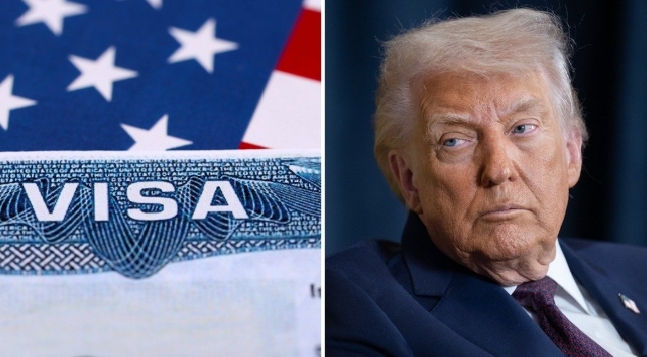
The Administration of United States President Donald Trump is preparing to revoke the business and tourism visas of foreign Nationals who entered the Country as short-term visitors before applying for asylum, in what could become the largest mass visa revocation in US history.
The proposed measure, announced by the US State Department, is part of the Trump Administration’s broader immigration crackdown, which has increasingly targeted both undocumented migrants and foreign nationals who entered the Country legally.
According to the State Department, it is working with the Department of Homeland Security (DHS) to identify foreign Nationals who entered the United States on non-immigrant visas as visitors but later filed asylum applications seeking to remain in the Country.
State Department spokesperson Tommy Pigott said the department was coordinating with DHS to “identify and revoke” the non-immigrant visas of people who entered the US claiming to be short-term visitors but subsequently sought asylum with the intention of staying permanently.
The planned action is expected to affect holders of B1 and B2 visas issued between 2016 and 2026 who have applied for asylum or are currently seeking asylum in the United States. B1 visas are generally issued for business-related travel, while B2 visas are primarily used for tourism and other temporary visits.
Although the State Department has not officially disclosed the number of people who could be affected, documents obtained by the Associated Press and information from two US officials indicate that up to 200,000 foreigners could have their visas revoked.
If implemented on that scale, the measure would constitute the largest single mass revocation of US visas in history, according to reports.
Nigerians among foreigners who could be affected
Nigerians are among the foreign Nationals subject to heightened US immigration scrutiny. The United States had already partially suspended the issuance of several categories of visas to Nigerian Nationals under a broader 2026 policy, including B1/B2 visitor visas, with limited exceptions.
However, the latest proposed revocation is not described as a Nigeria-specific measure. Rather, it is expected to apply to qualifying foreign nationals regardless of Nationality if they entered the US on B1 or B2 visas and subsequently sought asylum.
This means that Nigerians who fall within the targeted category could potentially be affected by the planned policy.
Visa revocation may not mean immediate deportation
The proposed cancellation of a visitor visa would not automatically mean that every affected person would be immediately deported from the United States.
According to officials cited by the Associated Press, many people with pending asylum applications would instead be reclassified while losing their status as business or tourism visitors.
The precise consequences for individual asylum applicants, including what would happen to their pending asylum claims, remain subject to the implementation of the policy and possible legal challenges. The State Department has indicated that the revocations would be carried out on a rolling basis, rather than through a single announcement covering a fixed number of people.
The planned measure is also likely to face legal challenges because of its potential implications for people who have already entered the United States legally and subsequently exercised their right to seek asylum.
US says asylum system has been abused
US Deputy Secretary of State Christopher Landau, in a post on X on Monday, August 24, accused the American immigration system of having been overwhelmed by what he described as “frivolous asylum claims.”
The Trump administration has repeatedly argued that stricter immigration enforcement is necessary to protect national security, prevent abuse of immigration procedures and ensure that US immigration laws are properly enforced.
The State Department said earlier in August that the Trump administration had already revoked more than 175,000 visas belonging to foreign nationals for various reasons, including violations of visa conditions, criminal conduct, fraud, calls for violence, abuse of the immigration system and national security concerns.
The latest proposal therefore represents another major step in an immigration enforcement campaign that has included increased scrutiny of visa applicants, additional documentation requirements and restrictions affecting several categories of foreign Nationals.
Rights groups raise concerns
The crackdown has drawn criticism from rights advocates, who argue that some of the Trump administration’s immigration measures threaten due process and other legal protections.
Critics have also expressed concern that intensified immigration enforcement could create an atmosphere of fear among ethnic minorities and increase the risk of racial profiling.
Legal challenges have already accompanied several immigration measures introduced by the administration, and the proposed mass visa revocation is expected to attract further scrutiny if it is implemented.
For Nigerians and other foreign nationals currently in the United States on visitor visas who have applied for asylum, the development could have significant implications. However, the final scope of the policy, the number of people affected and how pending asylum cases will be treated have yet to be fully clarified by the US government.
Global Mirror News gathered that the proposed revocations are still being prepared and could be modified or challenged before they are fully implemented. The State Department has not confirmed the reported figure of 200,000 affected visa holders, describing the number as dynamic because the revocation process is expected to continue on a rolling basis.