

Hardship Bites Harder as Nigerian Workers Begin Nationwide Strike, Demand N500 Petrol
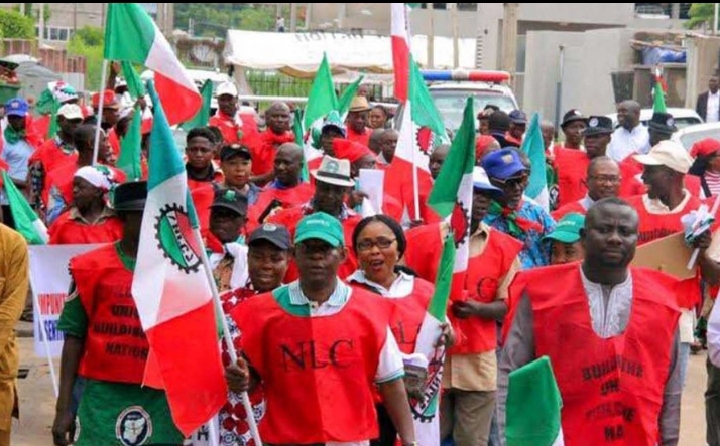
Federal, State and Local Government employees begin three-day protest; Union seek wage award, ₦500,000 minimum wage talks
Public servants across Nigeria have commenced a three-day nationwide warning strike over rising petrol prices, worsening economic hardship and demands for immediate financial relief, following the failure of the Federal Government to address their concerns before the expiration of a September 30 deadline.
The industrial action, which began at midnight on Friday, October 2, is expected to end on Sunday, October 4, 2026. It affects workers under the Federal, State and Local Government Services, including employees of Ministries, Departments and Agencies (MDAs).
Global Mirror News reports that the strike was declared by the Joint National Public Service Negotiating Council (JNPSNC), which directed its National and State leaders to mobilise members for the industrial action over the rising cost of living and what the Union described as the Government’s failure to respond to their demands.
The action followed a letter dated September 21, 2026, addressed to President Bola Ahmed Tinubu, in which the Council outlined its demands for a reduction in petrol prices, an immediate wage award and the commencement of negotiations for a new national minimum wage ahead of 2027.
Why workers are downing tools
The Unions’ decision to proceed with the strike came after President Tinubu’s Independence Day address on October 1 failed to produce the specific commitments on petrol prices and wage relief that the Council had demanded.
According to reports, the labour body had expected the President to address the demands before the deadline expired. Following the absence of the requested commitments, the Council confirmed that the warning strike would proceed as scheduled.
In a circular dated October 1 and signed by the JNPSNC National Secretary, Comrade Olowoyo Gbenga, the council directed its affiliate unions to disseminate the strike notice and mobilise workers for the three-day action.
The Council said the economic and psychological pressures facing workers, their dependants and other vulnerable Nigerians had become increasingly difficult to bear.
Global Mirror News gathered that the Union consider the rising cost of transportation, food, accommodation and other essential goods and services a major threat to workers’ purchasing power.
For employees who commute daily to Government offices, increases in transport fares can consume a substantial portion of their take-home pay, leaving less money for food, school fees, healthcare and other household necessities.
Workers demand petrol at ₦500 per litre
One of the principal demands of the JNPSNC is an urgent reduction in the pump price of petrol to ₦500 per litre.
The Council has called on the Federal Government to consider intervention measures to address the cost pressures affecting the downstream petroleum market.
Among the proposals attributed to the Council are an intervention fund to address petrol landing costs, support for oil and gas operators, and appropriate crude oil supply arrangements for the Dangote Refinery and modular refinery operators to encourage domestic refining.
In its statement, the Council described prevailing petrol prices as unaffordable for many workers and argued that expensive fuel has contributed to the rising cost of living.
Reports published before the strike put petrol prices at approximately ₦1,450 to ₦2,000 per litre in various locations, with some areas reportedly recording prices as high as ₦2,500 per litre. These are reported ranges, not a verified uniform nationwide price.
Global Mirror News reports that the workers’ demand reflects the wider effect of petrol prices on the Nigerian economy, where fuel costs influence commercial transport fares, food distribution, production and the delivery of services.
The Council is urging the government to take measures that would reduce the burden on households and make it easier for workers to meet their daily needs.
Wage award: Another major demand
In addition to lower petrol prices, the workers are demanding an immediate wage award to cushion the impact of prevailing economic conditions.
A wage award is an additional payment intended to provide financial relief to employees facing increased living costs, usually pending further adjustments to wages or the resolution of broader remuneration issues.
The Council maintains that such relief would help workers cope with the rising cost of essential goods and services while sustaining their commitment to public service.
Global Mirror News gathered that the demand is particularly significant for public servants whose salaries have come under pressure from increases in transport fares, food prices, rent and other basic expenses.
The Union want the government to move beyond general acknowledgements of economic hardship and introduce specific measures capable of providing immediate support to affected workers.
₦500,000 minimum wage negotiations sought for 2027
The labour dispute also extends to the future of workers’ remuneration.
The JNPSNC is calling for the immediate establishment of a tripartite committee to commence negotiations for a new national minimum wage expected to become due in 2027.
The Council is demanding negotiations towards a minimum wage of not less than ₦500,000, according to reports on its September 21 communication to the President.
A tripartite committee typically brings together representatives of government, organised labour and employers to negotiate employment and wage-related matters.
The Council has argued that beginning the process early would help prevent administrative delays and allow sufficient time for discussions, agreement and any necessary legislative procedures.
The demand places wage negotiations alongside petrol prices and the immediate wage award as the three central issues behind the warning strike.
Global Mirror News reports that the outcome of any future negotiations will be important to public servants seeking improved purchasing power and greater certainty about their earnings in the face of rising living costs.
Eight Union mobilise members Nationwide
The JNPSNC comprises eight public-sector unions representing workers across different areas of government service.
They include the Nigerian Civil Service Union; Medical and Health Workers Union of Nigeria; Association of Senior Civil Servants of Nigeria; and National Association of Nigerian Nurses and Midwives.
The other affiliates are the Amalgamated Union of Public Corporations, Civil Service Technical and Recreational Employees; Nigeria Union of Public Service, Reportorial, Secretarial, Data Processors and Allied Workers; National Union of Printing, Publishing and Paper Products Workers; and National Union of Agriculture and Allied Employees.
The Council directed its national and state officials to mobilise their members and ensure that the strike notice reached workers across the country.
The directive covers public servants at the federal, state and local government levels, including employees of ministries, departments and agencies.
The Union have framed the action as a collective response to economic pressures affecting not only public employees but also their dependants and other vulnerable members of society.
Local Government Services may be affected
The strike could have significant implications for residents who depend on Local Government Secretariats and other public offices for administrative services.
Depending on compliance by workers in individual Councils, activities that could experience delays include routine documentation, official correspondence, revenue-related transactions, community engagement and other administrative functions.
Local Government employees also support a range of grassroots activities, including public information, sanitation coordination and the implementation of Council programmes through relevant departments.
Global Mirror News reports that any disruption at this level could affect residents who need access to Council offices for routine official business.
However, the precise extent of disruption at individual Local Government Secretariats will depend on the level of participation by workers and any arrangements made for essential services.
Residents are therefore advised to verify the availability of specific services with the relevant offices before making journeys for time-sensitive transactions.
Public services face possible disruption
The participation of Federal and State employees could also affect administrative processes across government institutions during the three-day action.
Potential areas of disruption include official correspondence, documentation, routine office operations and services requiring the involvement of affected public servants.
The extent of the impact will vary according to the institutions involved and the level of compliance with the strike directive.
For Nigerians who rely on public institutions for essential services, the industrial action could mean delays in accessing some Government offices until normal operations resume.
Global Mirror News notes that the development underscores the connection between labour relations, workers’ welfare and the uninterrupted delivery of public services.
A prolonged disagreement could create additional challenges for government operations, while a negotiated settlement could help restore normal activities and establish a framework for addressing the unions’ concerns.
What happens next?
The immediate focus is on developments during the three-day warning strike, including the level of compliance nationwide and any response from the Federal Government.
As of October 2, the latest reports reviewed confirm the commencement of the strike following the expiration of the Unions’ deadline. They do not establish a new government agreement or a confirmed suspension of the industrial action.
A resolution would require engagement between the government and organised labour on the demands for petrol price relief, a wage award and the proposed minimum wage negotiations.
For public servants, the central concern remains how to cope with the cost of living and secure improved conditions of service. For the government, the dispute presents a need to address workers’ concerns while considering the financial and economic implications of the proposed interventions.
Global Mirror News will continue to monitor developments surrounding the strike, government responses and any decisions that could affect public servants and residents across the country.