

Federal Workers Demand N300,000 Minimum Wage, N1.5m Salary for Level 17 Officers
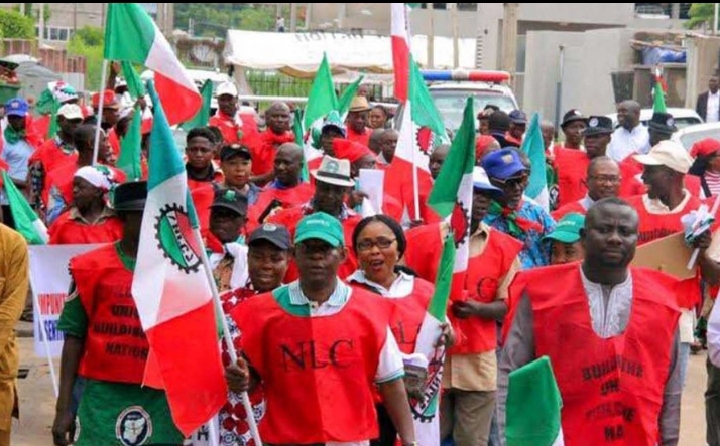
The Federal Workers Forum has asked President Bola Tinubu and the National Assembly to urgently review the salaries of Federal Civil Servants, demanding that the National minimum wage be increased from N70,000 to N300,000.
The demand was contained in a letter dated September 2, 2026, signed by the National Coordinator of the Federal Workers Forum, Andrew Emelieze, and the General Secretary, Ogundele Ayodele.
Global Mirror News gathered that the letter was addressed to the Senate President and Speaker of the House of Representatives through the Clerk of the National Assembly. President Tinubu, the Chief Justice of Nigeria and the Head of the Civil Service of the Federation were also listed among the recipients.
The workers also proposed a new salary structure that would place the salary of Level 17 Step 1 officers at N1.5 million, arguing that the existing wage structure no longer reflects the economic realities facing Federal Civil Servants.
In the letter, the forum said: “We call for justice and immediate wage review now, adjust the Federal minimum wage to N300,000 and a maximum wage of N1.5m for the Level 17 Officers.”
The FWF said its demand was driven by what it described as the incomplete implementation of the N70,000 minimum wage approved in 2024.
According to the workers, Federal Civil Servants had yet to receive the full consequential adjustment and associated allowances arising from the 2024 wage review.
“It will surprise you to hear that the Federal Government has not fully implemented the new national minimum wage since July 2024. We have been in the battle for full consequential adjustment of the new minimum wage,” the forum stated.
The 2024 wage review increased the minimum wage from N30,000 to N70,000, but the workers claimed that the implementation effectively resulted in a flat N40,000 increase across all levels of the Federal Civil Service.
The forum said, “Only N40,000 was added to the salaries of every Federal worker across all levels.”
The latest demand comes amid continued disagreements over the implementation of the 2024 minimum wage and other related allowances.
The N70,000 minimum wage replaced the previous N30,000 benchmark following negotiations between the Federal Government and organised labour. The new wage framework is subject to review after three years.
However, the FWF argued that the statutory three-year review period should not stop the government from responding to what it described as an emergency deterioration in workers’ purchasing power.
“As a matter of fact, it is suicidal for the federal workers to continue in this ugly situation. Hence, based on the current cost-of-living crisis, it can only be a matter of justice that the federal wages be immediately reviewed to meet up with the current economic realities in Nigeria,” it said.
The Federal workers said the sharp rise in the cost of food, transportation, accommodation, electricity, cooking gas and other basic necessities had made the current N70,000 minimum wage insufficient.
“Federal workers have been enduring the situation, and everything has been frustrating and nauseating. We cannot cope again. Federal workers are dying in instalments; we are suffering in silence; our salary is too poor; it is not taking us home,” the letter stated.
The forum further alleged that some Federal workers had become heavily indebted to microfinance institutions and digital loan platforms as they struggled to meet basic household needs.
“Federal workers are now heavily indebted to microfinances and, most times, federal workers resort to phone loan apps to get transportation to work,” it said.
The group also claimed that some workers had resorted to using firewood because they could no longer afford cooking gas.
According to the forum, the worsening financial situation could negatively affect workers’ productivity and potentially create an environment conducive to corruption.
“While the Federal Government is making more money now, the federal workers are underpaid and subjected to unprecedented sufferings and hardship,” the workers said.
The forum linked its demand to increased Government revenues and expenditure, insisting that Federal Civil Servants, whom it described as the “engine room of governance,” should benefit from improved National earnings.
“The Federal workers are the goose that lays the golden egg, but we are alienated from our labour,” the group stated.
The salary structure attached to the workers’ letter proposes N300,000 for Level 1 Step 1 workers, with salaries increasing progressively across the civil service to N1.5 million for Level 17 Step 1 Officers.
Under the proposal, Level 2 workers would earn N330,000, while Level 3 would receive N360,000.
Level 4 workers would earn N390,000, Level 5 N420,000, Level 6 N450,000, and Level 7 N480,000.
The proposed salary for Level 8 is N510,000, while Level 9 would earn N550,000 and Level 10 N600,000.
The forum proposed N700,000 for Level 12, N750,000 for Level 13, N800,000 for Level 14, N1 million for Level 15, N1.2 million for Level 16, and N1.5 million for Level 17 officers.
The FWF said the N300,000 minimum wage proposal was based on its estimated monthly expenditure for feeding, transportation, accommodation, family support, electricity, cooking gas, phone and data, water and other utilities.
“Our projections here are fair, and we believe it can still be accommodated in the present budget based on the daily increased earnings and the excess crude oil sales earnings,” the forum said.
Beyond the proposed salary increase, the workers demanded the payment of all outstanding salaries, promotion arrears and other entitlements owed to federal civil servants.
They also demanded the immediate implementation and payment of arrears of the 40 per cent peculiar allowance, full consequential adjustment arising from the 2024 minimum wage and the introduction of a permanent Cost of Living Allowance.
Other demands include a Family Support Allowance, an end to stagnation in the civil service, declaration of vacancies for promotions, comprehensive health insurance for federal workers and pensioners, car and housing loan schemes, long-service awards and improved pension arrangements.
The forum further called for free education for children of federal workers and pensioners in federal institutions, as well as reduced taxation on workers’ allowances and other tax relief measures.
The workers also extended their demands beyond salaries, appealing to the Federal Government to introduce a comprehensive social security programme for unemployed and underemployed Nigerians.
They called for free medical care for children, pregnant women and elderly citizens, alongside federal intervention programmes for the treatment of cancer and other life-threatening diseases.
On insecurity, the forum called for stronger measures to protect Nigerians and demanded action to secure the release of kidnapped citizens.
The FWF also called on the National Assembly to investigate reports that part of workers’ contributory pension savings was being borrowed by the executive.
“We like to bring to the notice of the National Assembly that we are hearing rumours that part of our contributory pension savings is being borrowed by the executive. We are calling for investigations and an immediate stoppage cum refund if it is true,” the forum stated.
The workers also demanded the return of petrol subsidy, price-control measures for essential goods and services, stronger local production and industrialisation, as well as measures to reverse the declining purchasing power of Nigerians.
The FWF urged the National Assembly to take up its demands with President Tinubu, stressing that federal workers should not be expected to wait until July 2027 before their salaries are reviewed.
“Federal workers have suffered enough. It has been three years of torture, torment and agony for the federal workers since the removal of fuel subsidy,” the forum said.
The group appealed to lawmakers and other government officials to treat its demands as an emergency intervention, arguing that improved wages were necessary to protect workers’ welfare and enhance their ability to effectively implement government policies.
“It is our prayers that the National Assembly, being the representative of the people, take up our plea with the utmost responsibility and act accordingly to ensure a just society,” the forum concluded.