

Workers Give Tinubu Sept 30 Deadline, Demand N500 Petrol or N500,000 Minimum Salary
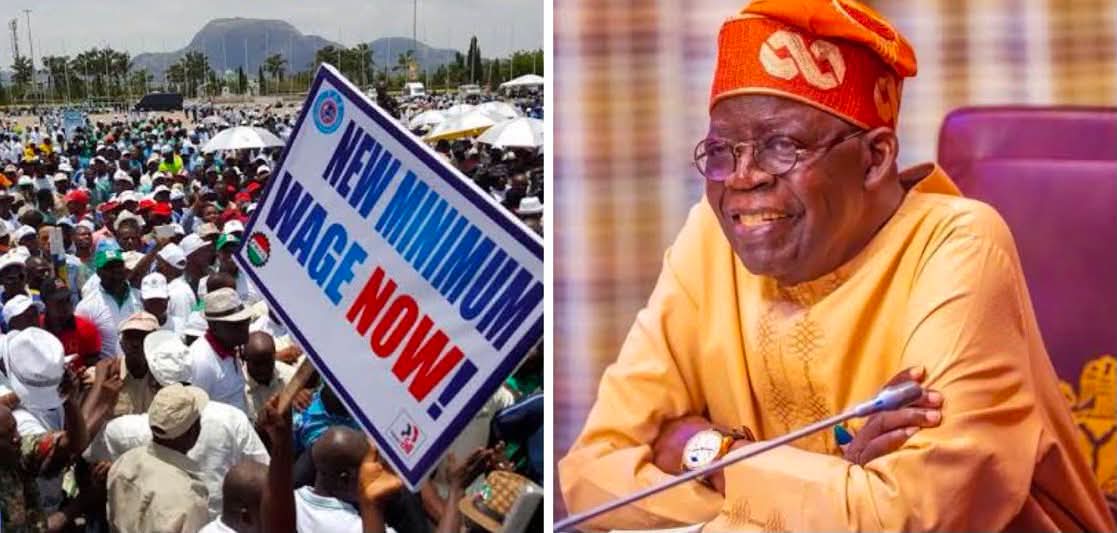
Civil Servants under the Trade Union Side of the Joint National Public Service Negotiating Council (JNPSNC) have given President Bola Ahmed Tinubu and the Federal Government until September 30, 2026, to respond to a series of demands aimed at addressing the worsening economic pressure on workers and their families.
The workers are demanding that the Federal Government stabilise the pump price of Premium Motor Spirit (PMS), popularly known as petrol, at ₦500 per litre, introduce an immediate Wage Award, review salaries and allowances across the public service and commence negotiations for a new National Minimum Wage ahead of January 2027.
The JNPSNC has also proposed that an officer on Grade Level 01, Step 1 should earn a minimum of ₦500,000 monthly under a proposed 2027 salary structure.
The demands were contained in a letter addressed to President Tinubu at the State House, Abuja, with the workers expressing concern over the impact of rising fuel prices, transportation costs, food prices, housing, healthcare and other essential expenses on the purchasing power of Nigerian workers.
According to the Council, petrol prices had risen to about ₦1,430 per litre or more in some locations, creating additional financial pressure on workers who already struggle to meet their daily needs.
The workers argued that the increase in fuel prices had produced a chain reaction across the economy because transportation, distribution, production and the prices of essential commodities are closely linked to the cost of petrol.
Workers Demand ₦500 Petrol
A major component of the workers’ demands is the reduction of petrol prices to ₦500 per litre.
The JNPSNC urged the Federal Government to look for ways to stabilise the price of petrol at what it described as an affordable level, arguing that such an intervention would benefit not only public servants but Nigerians generally.
The Council proposed the creation of a fuel intervention fund to support stakeholders in the petroleum sector and help bring down the cost of petrol.
It said the Federal Government could give the intervention another name if it did not want to describe it as a subsidy.
The workers maintained that the objective should be to ensure that ordinary Nigerians benefit from a government intervention capable of reducing transportation and other costs associated with high fuel prices.
The Council also linked its demand to the economic consequences of the removal of the petrol subsidy, saying the sharp rise in fuel prices had affected the prices of food, transportation, housing, healthcare and other necessities.
JNPSNC Backs NLC Position on Local Refining
The public service negotiating council also expressed support for proposals attributed to the leadership of the Nigeria Labour Congress (NLC) on addressing Nigeria’s fuel crisis.
Among the measures supported by the Council is the call for the Government to make adequate crude oil available to local refineries in naira and increase the country’s petroleum storage capacity.
The position is aimed at strengthening domestic refining and reducing Nigeria’s exposure to international oil-market fluctuations.
The JNPSNC said it supported the NLC’s argument that Nigeria, as an oil-producing country, should have mechanisms capable of protecting citizens from severe international energy-price shocks.
The workers argued that stronger domestic refining capacity could also contribute to job creation, economic activity and improved energy security.
Workers Reject Food Palliatives
The Council also criticised the continued reliance on food items as a major response to economic hardship.
It argued that the distribution of rice, noodles, vegetable oil, garri and other food items might provide temporary assistance but could not provide a lasting solution to the broader cost-of-living crisis.
Instead, the workers called for interventions capable of reducing the underlying cost of living and improving the purchasing power of workers.
The JNPSNC maintained that lowering fuel prices would have a wider multiplier effect because cheaper transportation and logistics could eventually reduce the cost of moving goods and services across the Country.
Immediate Wage Award Demanded
Beyond fuel prices, the workers are demanding an immediate Wage Award for public servants across the Federal, State and Local Government levels.
They are also seeking an upward review of salaries and allowances to reflect what they consider the current economic realities.
The Council wants the National Salaries, Incomes and Wages Commission (NSIWC) to commence discussions with the Nigeria Labour Congress (NLC), Trade Union Congress of Nigeria (TUC), JNPSNC and other relevant stakeholders on the proposed Wage Award and salary review.
The workers said their salaries had lost significant purchasing power as the prices of essential goods and services continued to rise.
According to the Council, the situation is increasingly making it difficult for many public servants to meet their basic financial obligations and is affecting morale, motivation and productivity in the public service.
₦500,000 Minimum Salary Proposed
The JNPSNC is also demanding that negotiations for a new National Minimum Wage begin immediately ahead of its proposed implementation in January 2027.
The Council wants the Federal Government to constitute a committee comprising relevant Government and labour representatives to commence negotiations.
Under its proposed 2027 salary structure, the council wants an officer on Grade Level 01, Step 1 to earn ₦500,000 per month.
It also wants wages across Ministries, Departments and Agencies (MDAs) to be harmonised, while similar salary reviews are encouraged at the State and Local Government levels.
The Council further proposed periodic reviews of salaries and allowances in line with inflation, arguing that workers’ earnings should not continually lose value as the prices of goods and services increase.
Workers Seek Subsidised Transport, Affordable Housing
The demands extend beyond salaries and petrol.
The JNPSNC is also seeking subsidised transportation and affordable housing schemes for public servants as part of measures to reduce the financial burden on workers.
The Council described public servants as central to governance and national development, noting that they are responsible for policy formulation, implementation of Government programmes and delivery of essential public services.
It therefore argued that improving workers’ welfare would help strengthen productivity and industrial harmony.
The workers said the continuing rise in the cost of food, transport, housing, healthcare and other necessities had placed many public servants under serious financial pressure.
September 30 Deadline
The JNPSNC has consequently asked President Tinubu to respond to the demands on or before Wednesday, September 30, 2026.
The council warned that the continued deterioration in living conditions was creating tension among workers and Nigerians generally.
It said an urgent response from the Federal Government would help address the concerns of workers and their dependants and prevent further escalation of industrial tension.
The council also expressed the expectation that President Tinubu’s forthcoming Independence Day broadcast would address the concerns raised by Nigerian workers.
What Workers Want
The demands presented by the JNPSNC can be broadly summarised as follows:
- Reduction and stabilisation of petrol prices at ₦500 per litre.
- Immediate Wage Award for public servants.
- Upward review of salaries and allowances across the public service.
- Immediate commencement of negotiations for a new National Minimum Wage ahead of January 2027.
- A proposed ₦500,000 monthly minimum salary for Grade Level 01, Step 1 under the proposed 2027 salary structure.
- Harmonisation of wages across MDAs.
- Periodic salary adjustments linked to inflation.
- Subsidised transportation for public servants.
- Affordable housing schemes for workers.
- Government intervention to strengthen domestic refining and stabilise fuel prices.
Global Mirror News reports that the latest demands come amid continuing discussions over the impact of fuel prices, inflation and workers’ incomes in Nigeria.
The JNPSNC’s position is that reducing fuel costs and increasing workers’ earnings should be pursued as part of a broader response to the rising cost of living.
The Federal Government’s response to the demands before the September 30 deadline is expected to determine the next stage of discussions between government and the affected public service unions.
For Nigerian workers, the immediate issues remain the cost of transportation, food and other necessities, the purchasing power of their salaries and the framework for the next minimum-wage review.
As the September 30 deadline approaches, attention is now focused on whether the Tinubu administration will accept, negotiate or offer alternative measures in response to the workers’ demands.
Global Mirror News will continue to monitor developments and bring readers updates as the Federal Government responds.