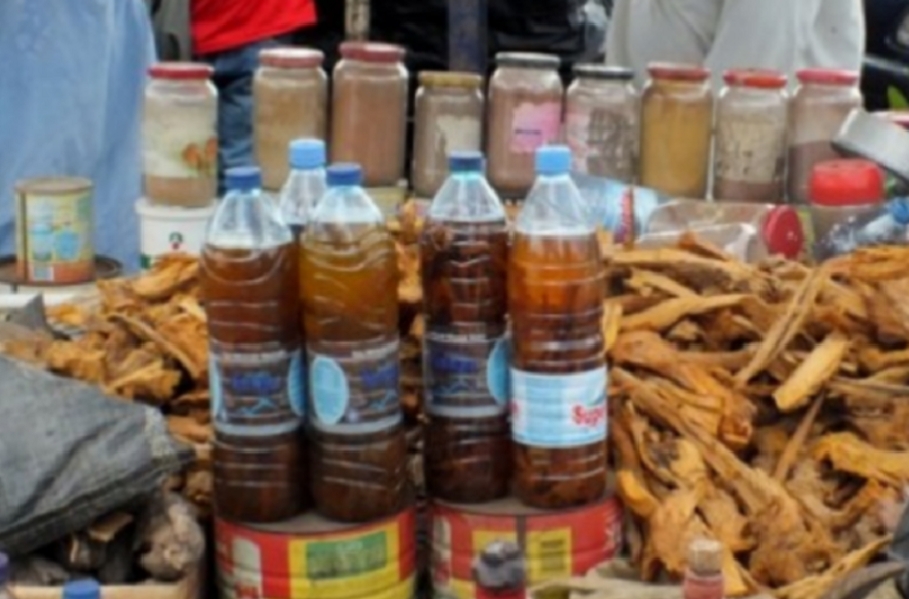

Lagos Raises Alarm Over Adulterated Palm Oil, Warns Residents to Beware of Fake Products

Residents of Lagos State have been warned to exercise extreme caution when buying palm oil following a red alert by the Lagos State Consumer Protection Agency (LASCOPA) over the increasing circulation of sophisticated adulterated palm oil in markets across the State.
The warning has raised fresh concerns about food safety, particularly as experts say some adulterated palm oil may contain potentially carcinogenic industrial dyes and recycled oils that could pose serious health risks to unsuspecting consumers.
The alert came after a technical presentation at the Lagos State Food Safety Conference and Exhibition 2026, where Dr. Nurah Oseni, a Senior Lecturer in the Department of Food Technology at Auchi Polytechnic, examined emerging methods being used to adulterate palm oil and the difficulty consumers face in identifying contaminated products.
Global Mirror News reports that the development is particularly concerning because palm oil is widely used in Nigerian households, restaurants and food businesses, meaning that contaminated products can potentially reach a large number of consumers through ordinary market channels.
In her presentation titled “Palm Oil Adulteration: Emerging Risks, Detection Strategies and Regulatory Control,” Oseni explained that palm oil is particularly vulnerable to adulteration because of its high trading volume, price differences, informal market practices and the long-standing belief among consumers that a very deep-red colour automatically indicates good quality.
According to the expert, unscrupulous operators may exploit this perception by artificially altering the colour and appearance of palm oil to make inferior or adulterated products appear genuine.
Among the emerging dangers identified by Oseni is the use of Sudan and Azo dyes, chemicals that can be used to give palm oil an unusually strong and uniform colour. Some of these substances have been identified as potentially carcinogenic and are not intended for use as food colourants.
She also raised concerns about the practice of mixing palm oil with recovered or recycled oils, including spent cooking oil, as well as the use of combinations of adulterants deliberately designed to escape basic quality checks.
Global Mirror News gathered that another growing concern is digital and traceability fraud, involving falsified product labels and batch records which can make it difficult for regulators and consumers to establish where a product originated.
The expert therefore called for stronger surveillance throughout the palm-oil supply chain, involving processors, traders, laboratories, researchers, regulators and consumers.
She recommended a tiered detection system beginning with risk-based screening and progressing to rapid physicochemical and spectroscopic tests, followed by laboratory confirmation where necessary.
Oseni also proposed a five-step surveillance framework for Lagos: “Risk Map, Sample, Screen, Confirm and Act.”
She said such a system would help regulators identify areas of higher risk, collect samples, conduct preliminary screening, confirm suspected adulteration through laboratory testing and take appropriate enforcement action.
LASCOPA intensifies market surveillance
Reacting to the development, the General Manager and Chief Executive Officer of LASCOPA, Afolabi Solebo, reaffirmed the agency’s determination to protect residents from unsafe and substandard consumer products.
Solebo urged Lagosians to be vigilant when purchasing palm oil and to report suspected adulterated products and traders through the agency’s official channels.
He said market surveillance had been intensified across the state and warned that persons found dealing in adulterated palm oil would face arrest and prosecution under relevant laws.
The LASCOPA warning has also placed renewed attention on the importance of consumers buying food products from trusted sources and avoiding products whose origin or quality cannot be established.
Experts warn against judging palm oil by colour alone
For many years, some consumers have associated deep-red palm oil with freshness and superior quality. However, the food-safety presentation warned that this assumption can be exploited by adulterators.
Oseni said authentic palm oil may naturally separate into layers, with the lower portion appearing orange to red-yellowish rather than displaying an unnaturally uniform deep-red appearance.
However, she stressed that visual inspection alone cannot confirm whether palm oil is adulterated.
This means consumers should not rely solely on colour, smell or appearance when determining the safety of palm oil, particularly where there are concerns about the source of the product.
Global Mirror News reports that laboratory testing remains necessary for reliable confirmation of suspected adulteration, especially where sophisticated chemical mixtures are involved.
Consumers urged to remain vigilant
The latest warning has put the responsibility of food safety on both regulators and consumers, with residents encouraged to pay closer attention to where they buy palm oil.
Consumers are advised to purchase from reputable and traceable sellers, avoid unusually coloured products and report suspicious products or traders to the appropriate authorities.
The development also highlights the need for stronger monitoring from production and processing points through transportation, wholesale and retail markets to ensure that adulterated products do not reach household kitchens.
For families that depend heavily on palm oil for cooking, the warning is a reminder that what appears to be an ordinary food purchase can carry serious consequences when products are deliberately tampered with.
LASCOPA’s intensified surveillance is expected to focus on identifying offenders, removing unsafe products from circulation and strengthening consumer protection across Lagos markets.
The Agency’s appeal is therefore clear: residents should remain alert, avoid questionable palm oil and promptly report suspected adulteration rather than assuming that an attractive colour is proof of quality.