

‘Let My Body Help Others’: Ailing Filmmaker Ola Balogun Gives Emotional Final Wish
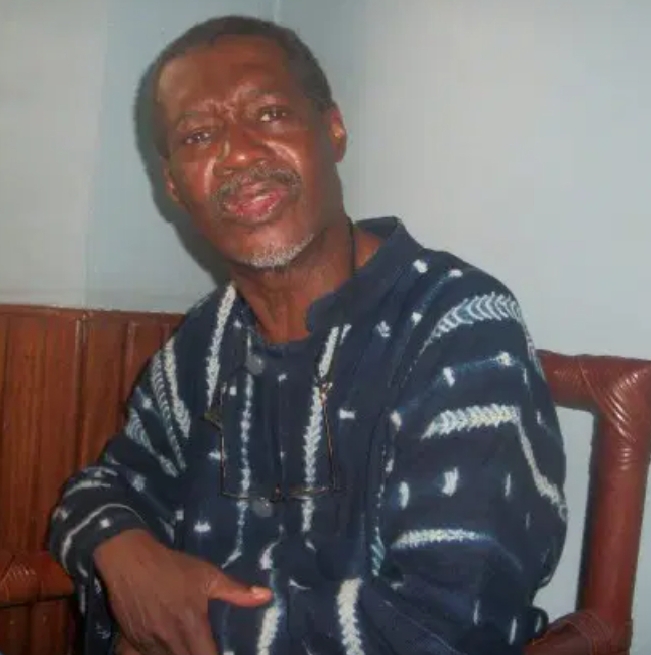
Veteran Nigerian filmmaker and cultural icon, Ola Balogun, has made an emotional appeal that could see parts of his body help save lives and train future Doctors after his death.
The 81-year-old filmmaker, who recently celebrated his birthday on August 1, made the disclosure while receiving treatment at Josek Medical Centre in Ogba, Lagos, following a fresh health challenge.
In what he described as a public rendition of his last will and testament, Balogun revealed that he wants his death, whenever it comes, to have meaning for those still living.
Rather than having his remains simply laid to rest, the veteran filmmaker has directed that any of his organs that are medically suitable for donation should be given to people who need them.
He specifically mentioned his kidneys and eyes, asking that they be donated to patients who could benefit from them.
Balogun also instructed that after any viable organs have been removed, his remaining body should be handed over to appropriate medical institutions for research and the training of future Doctors.
His decision carries a deeply emotional message: even after his final breath, he wants his body to continue serving humanity.
Explaining why he decided to make his wishes public at this time, Balogun said he had barely celebrated his 81st birthday when another medical alert forced him to seek treatment.
He acknowledged the uncertainty surrounding his latest health battle, saying this prompted him to put his wishes into writing rather than leave important decisions concerning his remains until later.
The filmmaker said his philosophy was influenced by the late nationalist leader, Chief Obafemi Awolowo, whose approach to life and death, according to him, emphasised careful preparation and an orderly departure.
Balogun’s wish is rooted in a simple but powerful belief — that his physical remains should still be useful to the living, even after his life has ended.
His words have brought a deeply human dimension to the conversation surrounding death, reminding many that a person’s legacy is not necessarily limited to what they accomplish while alive.
A life devoted to Nigerian cinema
Ola Balogun is widely regarded as one of the pioneers of Nigeria’s film industry and belongs to the generation of filmmakers who laid the foundation for the country’s modern cinema.
For several decades, he contributed to Nigerian filmmaking through feature films, documentaries and other creative works in English, Yoruba, Pidgin and Igbo.
His notable works include Alpha, Ija Ominira, Amadi, Nigersteel, Ajani Ogun, Musik Man and Oorun Moru.
He is also remembered alongside other pioneers of Nigerian cinema and theatre, including the late Hubert Ogunde, Ade Love, Jab Adu and Moses Olaiya, popularly known as Baba Sala.
These early filmmakers helped shape the indigenous Nigerian screen culture long before the explosive growth of contemporary Nollywood.
A final gift to humanity
For many people, the thought of death is frightening and difficult to discuss. But Balogun has chosen to confront the subject openly, turning what could be a painful final chapter into an opportunity to potentially give others another chance at life.
His kidneys could, if medically suitable and subject to the required procedures, help patients battling serious kidney failure. His eyes could potentially help restore sight, while his donated remains could assist medical students as they learn the complexities of the human body.
For a man who spent much of his life telling Nigerian stories through film, Balogun’s final message is perhaps another story in itself — one about compassion, service and leaving something behind for others.
“My physical remains should, if possible, be useful to the living,” is the principle behind his decision.
And as he continues to receive medical care, the veteran filmmaker’s wish has left behind a poignant reminder: sometimes, a person’s final gift can become another person’s new beginning.
Global Mirror News gathered that Balogun’s declaration should not be interpreted as an announcement of his imminent death. Rather, it reflects his decision to clearly communicate his wishes while undergoing treatment following his recent health challenge.