
FG Confirms Ebola Case in Abuja, Tracks 44 Contacts
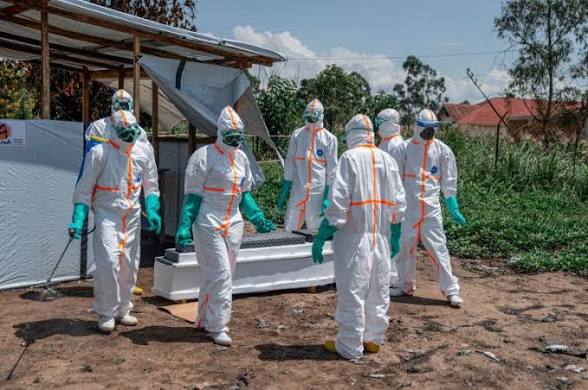
Woman who arrived from Uganda tests positive as health authorities intensify surveillance and containment measures Nationwide
The Federal Government has confirmed a case of Ebola disease in the Federal Capital Territory (FCT), Abuja, following laboratory confirmation of an infection in a woman who recently arrived in Nigeria from Uganda.
The development has prompted the activation of contact-tracing measures, with 44 close contacts identified so far as health authorities move to prevent further transmission of the potentially fatal disease.
The Coordinating Minister of Health and Social Welfare, Professor Muhammad Ali Pate, announced the development in a statement issued on Tuesday, October 20, 2026, assuring Nigerians that relevant authorities were working together to contain the infection and protect public health.
According to the minister, the patient arrived in Nigeria on an international flight from Uganda and was subsequently admitted to a private hospital in the FCT, where she received medical attention for several days before the infection was confirmed through laboratory testing.
The woman is currently in isolation and receiving medical care, while public health officials continue investigations to establish the extent of possible exposure and prevent secondary infections.
Contact tracing begins as FG strengthens surveillance
The Federal Government said 44 close contacts had been identified for monitoring. The group reportedly includes healthcare workers, patients, caregivers and individuals who may have encountered the patient during her journey.
Contact tracing is a critical public-health measure that involves identifying people who may have been exposed to an infected person, assessing their risk and monitoring them for symptoms within the relevant period.
The exercise is expected to help health authorities detect possible infections early, provide appropriate guidance and interrupt any chain of transmission.
The Federal Ministry of Health and Social Welfare, the Nigeria Centre for Disease Control and Prevention (NCDC), the FCT Health Services Secretariat and other relevant agencies are coordinating the response.
Surveillance has also been intensified, while the hospital where the patient received treatment is being supported to strengthen infection prevention and control procedures.
The Government has urged individuals contacted by public-health teams, including relevant airline passengers, to cooperate fully, provide accurate information and comply with official instructions.
Hospitals placed on alert
As part of the response, the Federal Government has called on public and private healthcare facilities across the country to remain on high alert for suspected Ebola infections.
Healthcare workers have been advised to promptly identify and report suspected cases, isolate patients when indicated and strictly observe infection prevention and control protocols to protect themselves, other patients and the wider community.
The directive is particularly important because early Ebola symptoms can resemble those of other illnesses, making careful assessment of symptoms, travel history and possible exposure essential.
Health authorities have also emphasised the need for prompt reporting and coordinated action rather than waiting until a suspected patient becomes critically ill.
Nigeria’s public-health response will depend significantly on the speed of investigations, the effectiveness of contact tracing, laboratory capacity and the ability of healthcare facilities to identify and safely manage suspected cases.
What Nigerians need to know about Ebola
Ebola disease is a severe viral illness that can cause serious complications and death. Transmission occurs primarily through direct contact with the blood or other bodily fluids of an infected person who is symptomatic, or through contaminated objects and materials.
The disease is not ordinarily spread through casual contact with someone who has no symptoms. Members of the public should, however, follow official guidance and avoid direct exposure to the bodily fluids of anyone suspected of having the infection.
Symptoms may include fever, severe weakness, headache, muscle pain, vomiting and diarrhoea. In severe cases, bleeding may occur, although it is not present in every patient.
Anyone who believes they may have been exposed should promptly contact public-health authorities for advice, even if symptoms have not developed. People who develop symptoms following a possible exposure should avoid close contact with others and seek guidance from health officials before travelling to a healthcare facility.
Regular handwashing, appropriate hygiene and compliance with public-health instructions remain important preventive measures.
Public urged to remain calm and avoid misinformation
The Federal Government has urged Nigerians not to panic, spread unverified reports or stigmatise the patient and individuals who may have been exposed.
Authorities have stressed that investigations are ongoing and that information should be obtained from credible, official sources as the response progresses.
The NCDC’s toll-free call centre, available 24 hours a day, can be reached on 6232 for public-health information and the reporting of suspected cases.
The latest confirmation comes after Nigeria had heightened its Ebola preparedness following the detection of an imported case in Kenya earlier in October. At that time, the NCDC said it was strengthening surveillance, laboratory readiness, infection prevention and control, and coordination with state governments and other relevant agencies.
The new confirmation makes the rapid implementation of those preparedness measures particularly important.
Nigeria previously contained an Ebola outbreak in 2014 through coordinated public-health action, contact tracing, isolation and monitoring of exposed persons. That experience provides valuable lessons, although the current situation requires fresh investigations and a response tailored to the circumstances of the confirmed case.
For now, the priorities are to establish the full exposure history, monitor identified contacts, protect healthcare workers, strengthen surveillance and prevent further transmission.
As Global Mirror News reports, the cooperation of healthcare professionals, travellers, affected contacts and the general public will be essential to the success of the containment effort.
The situation remains under investigation, and further developments should be guided by verified updates from the Federal Ministry of Health and Social Welfare and the NCDC.