
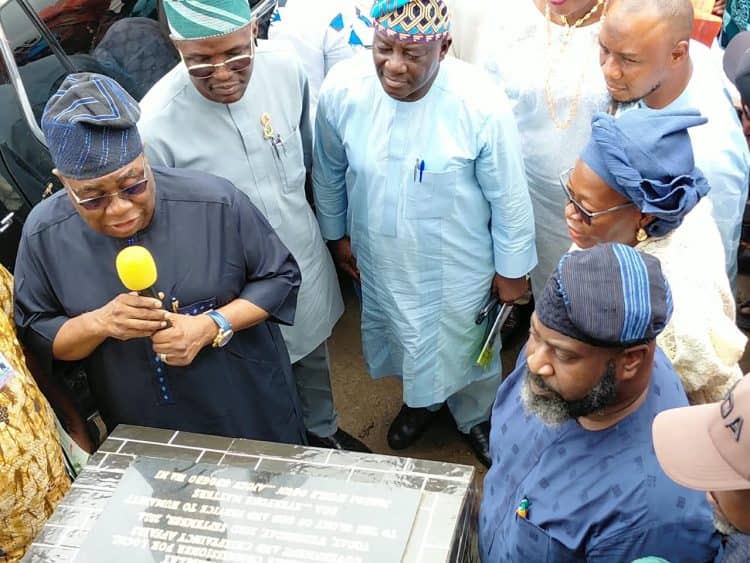
Six Months in Hell: 13 Children Die as 163 Kwara Kidnap Victims Return From Captivity
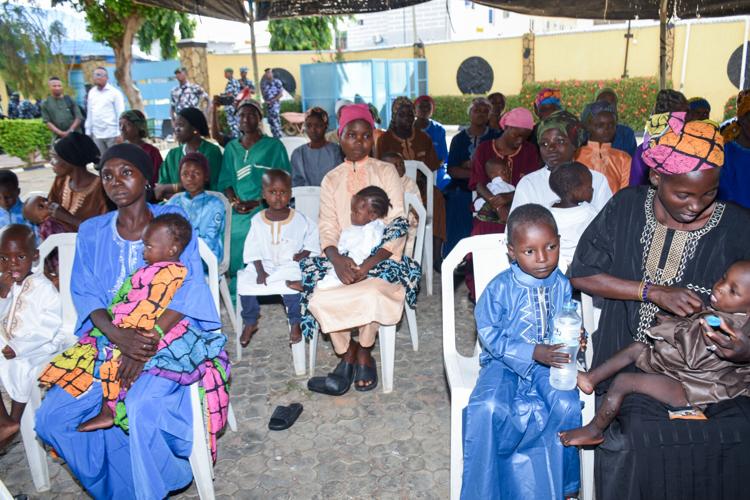
‘We saw death and suffering’ – survivors recount hunger, childbirth, burials and fear in forest hideout
For six months, the forest became a prison.
There were no locked doors, no iron bars and no concrete walls, yet the people held there knew they could not leave.
They were surrounded by armed men, cut off from their families and forced to endure hunger, sickness, rain, fear and the constant uncertainty of whether they would survive long enough to see home again.
Among those trapped in that nightmare were women and children.
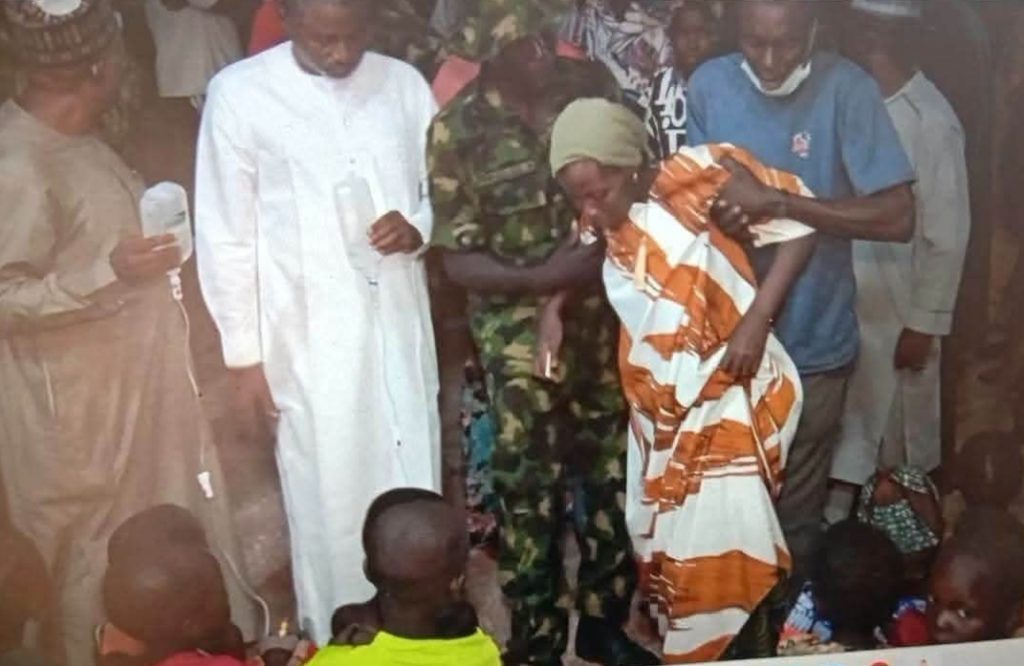
Now free, the survivors of the prolonged captivity in Kwara State are returning with stories of suffering that have turned a successful security operation into a painful reminder of the human cost of Nigeria’s insecurity.
One of the survivors, Saliu Amira, a nurse, has disclosed that about 13 children died during the six months the victims spent in captivity.
Amira was among 163 people rescued after being abducted from communities in Kaiama Local Government Area of Kwara State.
Her account, alongside those of other survivors, reveals the extent of the hardship endured by the captives before Nigerian security forces eventually freed them.
According to Amira, the victims were poorly fed and subjected to extremely difficult conditions.
She recalled that when they first arrived at the hideout, their captors gave them little more than guinea corn, salt and seasoning.
«“The kind of food that they are giving us over there… The day that we reached there, they just dropped guinea corn for us with salt and Maggi,” Amira recounted.»
She said the children suffered severely under the conditions.

«“They left us inside the river; the children that died are almost 13, and those people that followed them are 12 in number; that’s 25.”»
Her account suggests that while about 13 children died, another 12 reportedly remained with or followed their abductors, adding another disturbing dimension to the fate of children caught up in the six-month ordeal.
The February attack that changed everything
The ordeal began on February 3, 2026, when armed militants attacked Woro Community and other Communities in Kaiama Local Government Area of Kwara State.
The attack was devastating.
More than 160 people were reportedly killed, while others were taken hostage and moved into forest areas.
The victims who survived the initial attack were subsequently held captive for about six months.
The mass abduction became part of a wider security crisis in North-central Nigeria, where armed groups have increasingly exploited remote forests and difficult terrain to attack rural communities and hold victims captive.
For the families left behind, the months that followed were filled with uncertainty.
Some did not know whether their relatives were alive.
Others mourned loved ones killed during the attack while simultaneously waiting for the abducted members of their families to return.
Then, after six months, came the news they had been praying for.
The captives had been rescued.
163 Kwara victims among 308 people freed
Nigerian Security forces rescued at least 308 abducted people in what President Bola Ahmed Tinubu described as the Country’s largest single-day rescue operation.
The rescued victims included 163 people abducted from Woro Community in Kwara State, while another 145 were mainly from Niger State.
The operation was carried out through the combined efforts of Nigerian security Agencies, including the Military and other Security and intelligence formations.
The rescue was hailed as a major success for inter-agency cooperation.
The commander of the 22 Armoured Brigade, Brigadier General Nicholas Rume, who received the rescued Kwara victims, expressed satisfaction with the operation and commended the agencies involved.
«“Today I am happy to introduce to you the people whom, through the combined efforts of the Security Agencies, we have been able to rescue,” Rume said.»
He specifically acknowledged the contributions of other Security Agencies, describing the operation as evidence of the importance of cooperation among Nigeria’s security formations.
They came home, but their bodies told the story
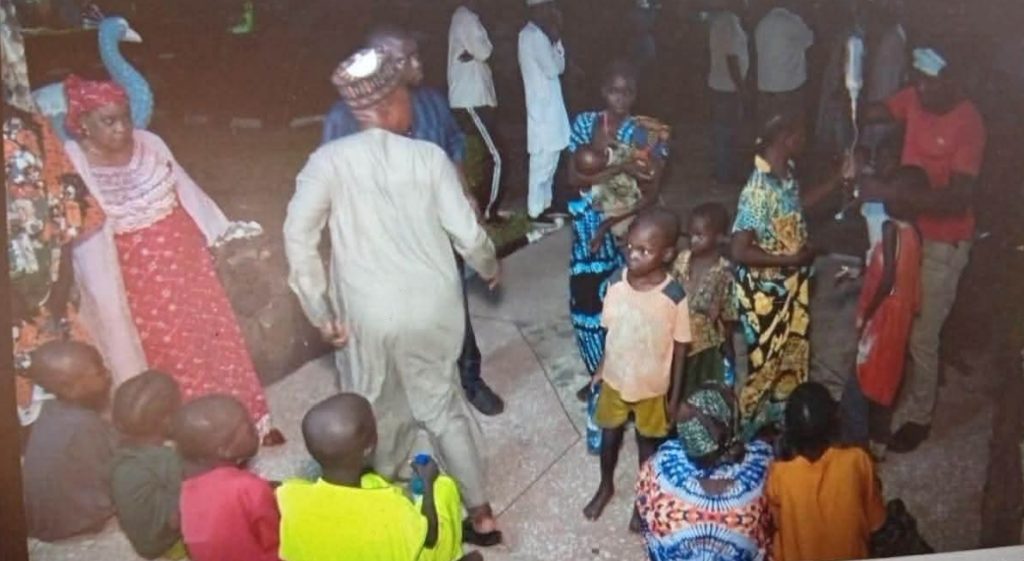
When the rescued captives were taken to Ilorin, their physical condition revealed much of what they had endured.
Many were described as emaciated and severely weakened.
Some were barely able to stand, while others suffered injuries and showed signs of emotional trauma.
Women and children were among those receiving medical attention at hospitals in the Kwara State capital.
For some of the women, the journey home was complicated by another painful reality: husbands and other relatives had been killed during the February attack.
They were returning to Communities they knew, but some would never again see the people with whom they had left those Communities months earlier.
‘We saw death and suffering’
For 44-year-old Mary Ishaya, captivity brought her face-to-face with death in a way she had never experienced before.
Ishaya said the captives sometimes went for days without food.
She also recalled being asked, alongside other captives, to bury people who died during the ordeal.
For a woman who had never handled or buried a dead body before, the experience became one of the most traumatic memories of her life.
«“I still cannot find the right words to describe what has happened to us. We saw death and suffering,” Ishaya said.»
Her words capture the experience of many of the rescued victims.
They were not merely kidnapped.
They were forced to witness sickness, starvation and death while knowing that their own lives could end in the same place.
When gives birth in the forest
Perhaps one of the most extraordinary accounts from the survivors came from Amira, the nurse.
In the middle of the forest, without the equipment available in a hospital or even the basic sanitary conditions expected during childbirth, she said she helped about 10 pregnant women deliver their babies.
There were no proper delivery rooms.
No medical theatre.
No sterile gloves.
No modern equipment.
The women had only the assistance Amira could provide under the circumstances.
«“I had no choice but to use my bare hands,” she said.»
The account illustrates the extraordinary burden placed on the nurse during captivity.
While she herself was a hostage, her medical knowledge made her one of the few people capable of helping women facing life-threatening situations in the forest.
Rain, sickness and fear of helicopters
The suffering was not limited to hunger.
Survivors said they were exposed to the elements and were sometimes beaten by rain.
They also lived under the constant fear of being discovered or attacked.
According to accounts reported by the Associated Press, the captives were instructed to hide whenever Nigerian military helicopters flew over the forest areas where they were being held.
For the captives, the sound of a helicopter, something that ordinarily might have represented hope, could instead mean that they needed to disappear from sight.
Their lives were dictated by the movements and instructions of their captors.
Hope slowly disappeared
Six months is a long time to live without knowing what the next day will bring.
For some survivors, the hope of returning home gradually faded.
They prayed.
They waited.
They watched people around them fall sick and die.
They endured hunger and exposure.
And as the weeks became months, some began to believe that their families might never see them again.
One survivor recalled that they prayed for the opportunity to return home, but eventually stopped believing that such a day would come.
That sense of hopelessness was perhaps one of the most devastating aspects of their captivity.
The abductees were physically trapped, but the prolonged uncertainty also placed an enormous psychological burden on them.
Some returned without husbands, children and relatives
The tragedy did not end with the rescue.
Some survivors returned to discover that the people they loved had been killed during the original attack.
For women whose husbands were among those killed, freedom came with grief.
For children who lost parents, returning home could not restore the family life they knew before February 3.
And for families who had spent six months praying for the return of loved ones, the joy of seeing them alive was mixed with the painful knowledge that others would never return.
This is why the rescue of the 163 victims cannot be measured only by numbers.
Behind every rescued person is a family.
Behind every empty space in the rescue group is another family waiting for answers.
46 victims hospitalised
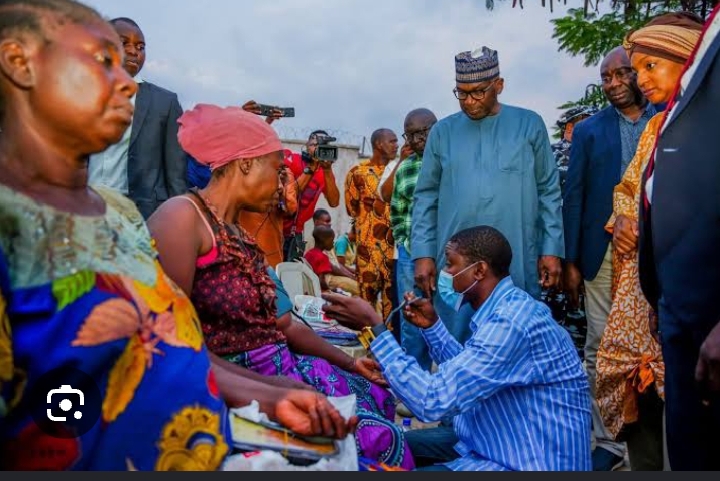
After the survivors were brought to Ilorin, the Kwara State Government moved to provide medical assistance.

Governor Abdulrahman Abdulrazaq disclosed that 46 of the rescued victims had been admitted to a Government hospital for treatment.
He said he had directed that appropriate medical attention be provided to all the rescued victims to safeguard their wellbeing.
The Governor also commended the Security Agencies for the successful operation and said the establishment of a new Army brigade in the state would further strengthen security across Kwara.
The immediate medical response is crucial because the survivors are not returning from an ordinary journey.
Some have physical injuries.
Others have suffered malnutrition.
Many have witnessed death.
And almost all have experienced a prolonged period of fear and uncertainty.
A rescue that exposes a bigger security problem
The successful recovery of 308 abducted Nigerians is undoubtedly a major achievement for Nigeria’s Security Forces.
But the circumstances surrounding the rescue also expose the magnitude of the Country’s kidnapping and insurgency problem.
That hundreds of people could be held for months in forest hideouts demonstrates the ability of armed groups to operate across difficult terrain and hold large numbers of civilians outside the reach of their families and Communities.
The fact that the victims included women and children makes the situation even more disturbing.
The February attack on Woro and surrounding Communities was not merely a Security incident.
It was a devastating assault on ordinary people whose lives were suddenly transformed by violence.
Tinubu hails ‘largest’ single-day rescue
President Tinubu hailed the operation that freed the 308 victims as the largest rescue operation ever undertaken by Nigerian security forces in a single day.
The 163 Kwara victims were rescued alongside the 145 others, primarily from Niger State.
The operation has been presented as evidence of improved coordination among Nigeria’s security agencies, with the military, police, intelligence and counter-terrorism structures contributing to the mission.
For families of the rescued victims, however, the statistics mean little compared with the simple fact that their loved ones are alive.
After six months of waiting, they can finally hear their voices again.
They can finally hold them.
They can finally begin the painful process of rebuilding lives interrupted by violence.
The children who never came home
But amid the celebrations, one painful fact remains.
About 13 children did not survive the captivity, according to survivor Saliu Amira.
Their names may not yet be known to the wider public.
Their individual stories may never make national headlines.
But they were children who had families, dreams and futures before the attack.
They were among the most vulnerable people caught in a conflict they did not create.
Their deaths are perhaps the most painful reminder that behind Nigeria’s kidnapping statistics are human lives that cannot be replaced.
For the survivors, freedom is only the beginning
The 163 rescued Kwara victims have crossed one of the most difficult stages of their ordeal.
They have left the forest.
They have been reunited with authorities.
They are receiving medical care.
And, eventually, they will return to their families and communities.
But the psychological scars of six months in captivity will not disappear simply because the captives have been freed.
For some, the sound of aircraft may forever remind them of hiding from helicopters.
For others, hunger may bring memories of the days when there was barely enough food to survive.
For the women who gave birth under such brutal conditions, the memories of those deliveries will remain part of their lives.
For those who buried fellow captives, death will have a different meaning.
And for the families who lost children, husbands, wives, parents and siblings, freedom cannot bring back those who were killed.
The rescued victims have therefore returned home carrying two stories at once — the story of survival and the story of loss.
They survived six months of captivity.
But some of the people they entered the forest with did not.
And as Kwara welcomes its survivors home, the story of the 163 victims stands as another painful reminder that Nigeria’s battle against kidnapping and violent extremism is ultimately a battle to protect ordinary lives.
Global Mirror News gathered that the survivors are receiving medical attention and are expected to be reunited with their families after the necessary medical checks and support.