
OLOKOLA: BEYOND POLITICAL PROPAGANDA, THE FACTS ABOUT ABIODUN’S DEVELOPMENT DRIVE IN OGUN WATERSIDE
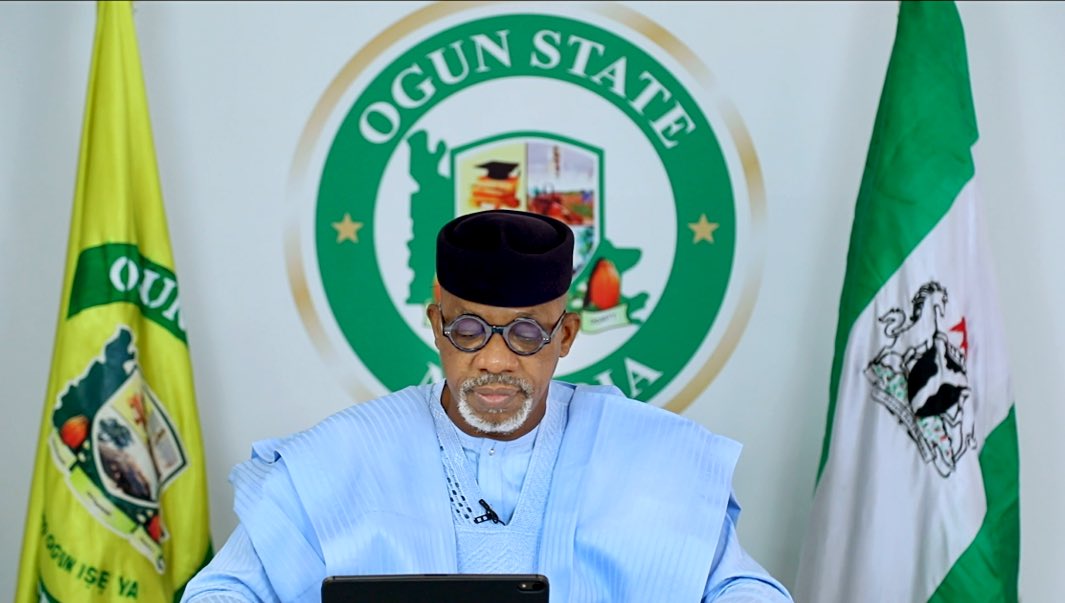
The attempt to portray Governor Dapo Abiodun’s renewed efforts to unlock the economic potential of Ogun Waterside as election-season politics is a misrepresentation of facts and an unfortunate attempt to turn a generational development opportunity into a partisan argument.
By Kayode Akinmade
There is a difference between holding a government accountable and deliberately distorting facts to discredit its development initiatives. There is also a difference between legitimate political criticism and the systematic misrepresentation of events to create an impression that bears little relationship to reality.
The article titled “Olokola: Dapo Abiodun’s Seven Years of Silence, Now Seasoned with Election-Time Promises” unfortunately falls into the latter category.
Its central argument is that Governor Dapo Abiodun has suddenly discovered Ogun Waterside because of an impending election, after allegedly neglecting the Olokola project for nearly seven years.
But this argument conveniently ignores the complexity of the Olokola development vision, the historical challenges that frustrated its implementation, the distinction between successive investment proposals and the concrete steps currently being taken to reposition Ogun’s coastline as a major maritime and industrial destination.
More importantly, it attempts to dismiss a major international investment partnership before its implementation has even commenced.
For the avoidance of doubt, the development of Ogun Waterside did not begin with the recent announcement of the Gateway Deep Sea Port. Neither did the area’s economic potential suddenly become relevant because of an election.
What has changed is the level of institutional coordination, investment engagement and strategic commitment being brought to bear on the realisation of that potential.
THE HISTORY OF OLOKOLA IS NOT THE HISTORY OF INACTION BY ABIODUN
The writer invokes the history of the Olokola Free Trade Zone and its previous investment projections, including the much-publicised $30 billion ambition, as though the failure of successive administrations to translate that vision into reality can be attributed to the present administration.
That is a fundamental distortion of history.
The Olokola project has been on the drawing board for more than three decades. It passed through different political administrations, investment negotiations and development proposals without achieving the anticipated transformation of the coastal communities.
Governor Abiodun did not create those historical challenges. He inherited a development vision that had remained largely unrealised despite its enormous potential.
The more relevant question, therefore, is not why the present administration did not magically transform an inherited and complicated project into a functioning industrial and maritime hub immediately upon assuming office.
It is what steps have now been taken to move the coastal development ambition from years of uncertainty towards a more structured investment framework.
That is where the significance of the present development becomes apparent.
THE $7 BILLION DP WORLD PARTNERSHIP IS NOT AN ELECTION CAMPAIGN SLOGAN
On September 24, 2026, the Ogun State Government and DP World MEA FZE signed Memoranda of Understanding in Paris, France, for the development of the Gateway Deep Sea Port and the Ogun State Blue Marine Special Economic Zone.
This was not a meeting in a political party secretariat, a campaign rally or a private declaration by the Governor.
The signing ceremony was witnessed by President Bola Ahmed Tinubu and attended by the Minister of Marine and Blue Economy, Adegboyega Oyetola, the leadership of the Nigerian Ports Authority, senior representatives of DP World and other relevant stakeholders.
The agreements envisage an initial investment exceeding $7 billion and projects more than 50,000 direct jobs at full development.
The proposed Gateway Deep Sea Port will have a four-kilometre berth and an 18-metre draft, while the adjoining Blue Marine Special Economic Zone is planned to cover approximately 10,000 hectares.
These are identifiable project components, not vague political promises.
Indeed, President Tinubu publicly commended Governor Abiodun and the Ogun State Government for securing the land, structuring the investment framework and reducing project risks for international investors.
The President also assured the investors of Federal Government support in providing regulatory clarity, policy stability and the necessary institutional framework to facilitate implementation.
Is the writer suggesting that the President of the Federal Republic of Nigeria, the Nigerian Ports Authority and one of the world’s leading port operators are participating in an election campaign?
The facts deserve a more responsible interpretation.
An MoU is not a completed port, and nobody has suggested otherwise. It is an important stage in establishing the framework for an investment partnership. The real test is implementation, and that is precisely why the next phase of the process matters.
But dismissing the agreement simply because construction is not yet complete is neither fair criticism nor sound economic analysis.
THE GOVERNOR IS BUILDING AN INTEGRATED ECONOMIC CORRIDOR, NOT CHASING HEADLINES
Perhaps the greatest weakness in the article is its failure to understand the integrated nature of the development initiative.
The Gateway Deep Sea Port is not being conceived as an isolated maritime facility.
It is part of a wider economic corridor involving the Blue Marine Special Economic Zone, the proposed OGLNG project, the Lagos-Calabar Coastal Highway, the Gateway International Airport and other supporting infrastructure.
The importance of this arrangement cannot be overstated.
A modern seaport requires more than a shoreline and berthing facilities. It needs road connectivity, energy infrastructure, industrial facilities, logistics networks, security arrangements and access to markets.
This is why the emerging coastal development framework is significant.
The 28-kilometre Ogun section of the Lagos-Calabar Coastal Highway is expected to provide an important connection to the port and industrial zone, linking the corridor to Lagos, the Nigerian hinterland and wider African markets.
Similarly, the renewed engagement between the Ogun State Government and NNPC on the proposed OGLNG project introduces an important energy dimension to the emerging industrial ecosystem.
These developments are interconnected.
It is therefore misleading to isolate the deep seaport from the wider infrastructure and investment strategy and then pretend that the government is merely recycling an old political promise.
THE OGLNG ENGAGEMENT ALSO TELLS AN IMPORTANT STORY
Another development conveniently overlooked by the writer is the renewed engagement between the Ogun State Government and the Nigerian National Petroleum Company Limited on the proposed OGLNG project.
Following the DP World agreements, an NNPC delegation visited Ogun State to discuss the revival of the long-delayed gas project.
The discussions included the technical and infrastructural requirements for the proposed facility, with NNPC officials examining the challenges that had frustrated its earlier development.
This is particularly important because the proposed LNG facility could provide an energy base for industries within the emerging coastal corridor.
The OGLNG discussions demonstrate that the administration is not approaching Ogun Waterside’s development as a single-project publicity exercise.
It is pursuing the complementary infrastructure and investment partnerships required to make the coastline economically productive.
WHY SHOULD THE TIMING OF DEVELOPMENT BECOME A REASON TO OPPOSE DEVELOPMENT?
The writer repeatedly questions why the renewed investment drive is happening now.
This is perhaps the most curious argument in the entire article.
Should a government abandon an investment opportunity because it has taken years to mature? Should international partnerships be rejected because they are being concluded towards the later part of an administration? Should a governor refuse to pursue a strategic project simply because its implementation may extend beyond his tenure?
Development does not operate according to the convenience of political commentators.
Major infrastructure investments require negotiations, feasibility assessments, land arrangements, regulatory approvals, investor confidence, financial structuring and institutional coordination.
Such processes cannot be reduced to the simplistic assumption that every project announced towards the end of an administration is an election gimmick.
Indeed, the President’s intervention and the involvement of federal institutions underscore the importance of the project beyond the political boundaries of Ogun State.
The question should be whether the necessary foundations are being established and whether the parties will fulfil their commitments.
That is a legitimate basis for accountability.
THE GOVERNOR’S PREVIOUS EXPERIENCE IS AN ASSET, NOT AN INDICTMENT
The article also attempts to turn Governor Abiodun’s previous professional involvement in the oil and gas sector and his reported association with earlier Olokola initiatives into an argument against him.
This is another exercise in selective reasoning.
A governor’s familiarity with a development project and its historical challenges should ordinarily be regarded as an advantage.
Understanding the investment environment, the history of failed negotiations and the obstacles that frustrated previous efforts can help in developing a more realistic strategy for moving the project forward.
The fact that Abiodun had previous professional exposure to the Olokola vision does not establish that he was responsible for its decades-long delay.
More importantly, it does not invalidate the efforts of his administration to establish a new investment framework for the development of Ogun’s coastline.
The relevant question is what has been achieved under the present administration, not how an individual’s professional history can be selectively presented to construct a political accusation.
OGUN WATERSIDE IS NOT A POLITICAL BARGAINING CHIP
There is another insinuation in the article that deserves to be challenged.
It suggests that the development of Ogun Waterside is being offered as a political reward for supporting the Governor’s future ambition.
There is no basis for such a conclusion in the documented investment agreements.
The Gateway Deep Sea Port and Blue Marine Special Economic Zone are economic development initiatives involving the Ogun State Government, international investors and federal institutions.
Their significance extends beyond the political fortunes of any individual.
When fully developed, they have the potential to create employment, expand maritime trade, stimulate industrial production, strengthen logistics and generate economic opportunities for communities across Ogun State and beyond.
The people of Ogun Waterside deserve these opportunities, irrespective of political affiliations.
That is precisely why the project should be subjected to constructive scrutiny rather than dismissed through partisan insinuations.
ACCOUNTABILITY MUST APPLY TO FACTS, NOT INVENTED NARRATIVES
There is nothing wrong with asking questions about the financing structure, implementation schedule, environmental safeguards, host-community participation and measurable milestones of the proposed projects.
In fact, these are necessary questions that should continue to be asked as the investment framework progresses.
But accountability must be based on facts.
It is misleading to suggest that the $7 billion agreement is simply a rebranding of the old $30 billion Olokola proposal without establishing the relationship between the two investment frameworks.
It is equally misleading to describe the Governor’s efforts as seven years of silence when the present administration has now secured a documented investment partnership with DP World, obtained presidential backing and opened fresh discussions with NNPC on the OGLNG project.
The difference between the old ambition and the current development framework must be understood.
One has remained largely unrealised for decades. The other represents a renewed attempt to establish an integrated maritime, industrial and energy corridor through identifiable partnerships and investment agreements.
The new initiative must be judged by its implementation. But it cannot fairly be dismissed as though nothing has changed.
Ultimately, the people of Ogun Waterside deserve more than political arguments about who should receive credit for the area’s development.
They deserve a functional deep seaport, industries, jobs, roads, energy infrastructure and opportunities for their children.
They deserve responsible scrutiny of every agreement and sustained pressure on all parties to deliver on their commitments.
What they do not deserve is to have a generational economic opportunity reduced to a weapon in the political rivalry of individuals whose disagreements have little to do with the actual development needs of the communities.
Ogun Waterside’s future is too important to be sacrificed on the altar of partisan bitterness.
The facts should speak louder than political propaganda.