
Nigerians Groan Under Prolonged Blackouts As DisCos Apologise, Power Sector Blame Game Intensifies – Global Mirror News
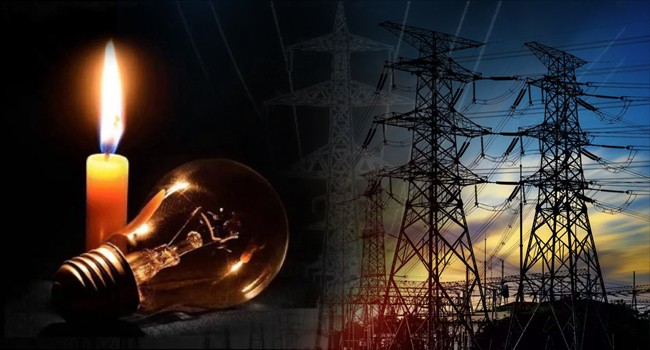
Households, businesses battle rising costs of alternative power as electricity operators trade accusations over worsening supply
Millions of Nigerian households and business owners struggling with persistent electricity shortages have received an apology from electricity distribution companies, even as disagreements among key players in the power sector deepen over the actual causes of the Nationwide blackouts.
The apology, however, has done little to ease public frustration, as consumers continue to contend with unreliable electricity, rising operating costs and the growing financial burden of keeping their homes and businesses running with generators and alternative power sources.
The Managing Director and Chief Executive Officer of the Association of Nigerian Electricity Distributors (ANED), Sunday Oduntan, tendered the apology on Monday during an appearance on Channels Television’s Sunrise Daily, acknowledging the hardship Nigerians had experienced over several weeks of inadequate electricity supply.
Oduntan admitted that electricity consumers deserved an apology, noting that the prolonged disruption had subjected families, traders, manufacturers and service providers to considerable difficulties.
He said: “I’d like to first of all start by apologising to Nigerians. Apology is needed; it is essential because Nigerians have been taken through this problem over the past few weeks.”
Beyond the apology, however, the ANED chief expressed concern over what he described as the re-emergence of a blame game among stakeholders in the Nigerian Electricity Supply Industry, warning that the practice could further frustrate efforts to resolve the persistent power crisis.
He recalled that similar disagreements characterised the sector between 2016 and 2019, when electricity distribution companies, transmission operators, generation companies and gas suppliers routinely shifted responsibility for poor electricity supply among themselves.
According to him, DisCos blamed the Transmission Company of Nigeria (TCN), transmission operators pointed fingers at generation companies (GenCos), while power generators attributed their inability to produce sufficient electricity to inadequate gas supply and payment-related challenges.
Oduntan warned that returning to such a pattern would undermine efforts to address the structural problems confronting the electricity industry.
NNPC, NISO Disagree Over Gas Supply
The controversy has further intensified following conflicting explanations from the Nigerian Independent System Operator (NISO) and the Nigerian National Petroleum Company Limited (NNPC) over the factors responsible for the declining electricity generation.
While NISO identified inadequate gas supply to thermal power plants and reduced output from hydroelectric stations, partly caused by lower water levels and reservoir inflows, the NNPC subsequently issued a statement indicating that its gas transportation network had no constraints affecting deliveries to power plants.
The conflicting positions have raised questions about the actual state of gas availability, payments for supplied gas and the operational difficulties affecting electricity generation companies.
Oduntan questioned the completeness of the NNPC’s explanation, insisting that Nigerians deserved specific information about whether gas supplied to power plants had been paid for and whether outstanding financial obligations were affecting deliveries.
He accused the National oil company of providing incomplete information and called for greater transparency among the stakeholders.
The ANED chief consequently urged the Minister of Power, Joseph Tegbe, to take charge of the situation by convening all relevant operators to establish the actual causes of the shortages and agree on a coordinated solution.
He maintained that Nigerians should not continue to suffer while institutions responsible for providing electricity engage in public disagreements over who should be held accountable.
Band A Customers Also Feel the Impact
The worsening electricity situation has also renewed questions about the effectiveness of the Band A, B and C tariff classifications introduced to link electricity payments with specified minimum daily supply hours.
Particularly troubling are complaints from Band A customers, who are expected to receive a minimum of 20 hours of electricity daily but have continued to experience inadequate supply in several locations.
For households paying higher electricity tariffs, the inability to enjoy the promised supply has heightened concerns about consumer protection, service accountability and the value customers receive for their money.
Small business owners, including barbers, tailors, cold-room operators, welders, food vendors and shop owners, are among those bearing the consequences of the unreliable supply.
Many have been forced to spend more on petrol and diesel to operate generators, while others have increased the prices of their goods and services to recover the additional costs of doing business.
For ordinary households, the situation has become particularly uncomfortable amid intense dry-season heat, with prolonged outages preventing many families from operating fans, refrigerators and air conditioners.
Although solar energy and inverter systems offer alternative solutions, the high cost of purchasing and installing the equipment remains beyond the reach of many low-income households and small enterprises.
Public Figures Raise Alarm Over Electricity Crisis
The situation has attracted criticism from prominent Nigerians, with veteran actress Kate Henshaw expressing frustration over the country’s unreliable electricity supply.
Henshaw lamented that Nigerians had effectively turned their homes into mini-factories because of the constant need to generate their own electricity.
Content creator Cute Abiola also appealed to President Bola Tinubu, drawing attention to the unbearable heat and the difficulties Nigerians face in accessing affordable alternative electricity.
Their reactions reflect the growing public dissatisfaction with a power sector that continues to struggle to provide reliable electricity despite successive government interventions and reform initiatives.
Tinubu’s Electricity Promise Comes Under Scrutiny
The renewed crisis has also brought President Bola Tinubu’s 2023 campaign promise to improve electricity supply and end estimated billing back into public discussion.
During an engagement with members of the Organised Private Sector in Lagos before the presidential election, Tinubu had assured Nigerians that his administration would ensure adequate electricity supply and eliminate estimated billing.
He had challenged Nigerians to hold him accountable, promising that they should not support his second-term ambition if he failed to fulfil the commitment without providing adequate reasons.
With households and businesses now battling prolonged outages, rising energy expenses and uncertainty over when normal supply will return, the administration faces renewed pressure to translate its electricity commitments into measurable improvements.
For consumers, the immediate concern goes beyond apologies and explanations. Nigerians want consistent electricity, transparent billing, improved service delivery and accountability from every institution responsible for the country’s power supply.
As the disagreements among electricity distribution companies, transmission operators, generation companies and gas suppliers continue, the fundamental question remains whether the country’s power sector can move beyond mutual accusations and deliver the reliable electricity millions of Nigerians desperately need.
Global Mirror News reports that the latest development underscores the urgency of coordinated leadership, transparency and accountability across the electricity value chain, as prolonged power shortages continue to affect household welfare, business productivity and the wider economy.