Odufowokan’s First Class Feat: How Abiodun’s Aide Returned to University 30 Years After First Admission – Global Mirror News
Veteran journalist, who studied alongside two of his children, emerges among Chrisland University’s First Class graduates after decades in Journalism and Public Service
By Bolanle Sobosola
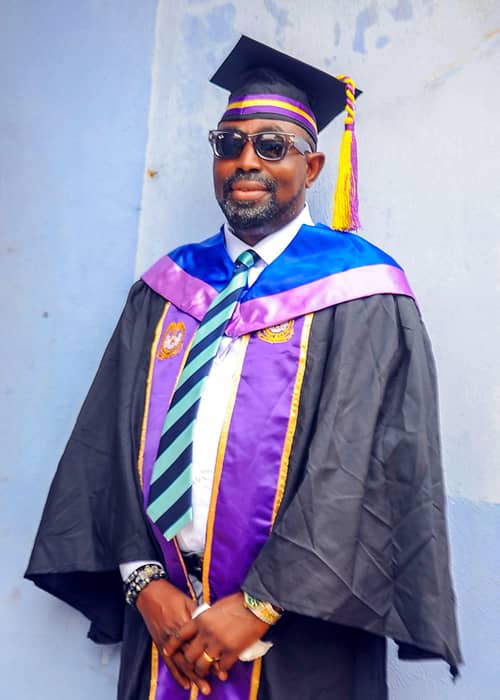
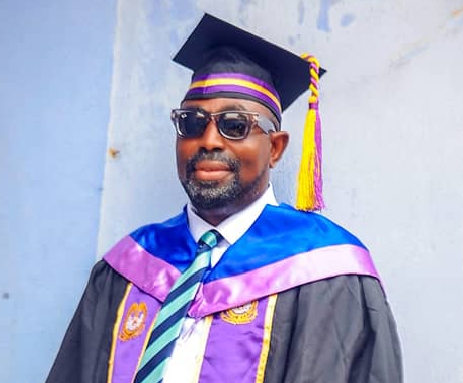
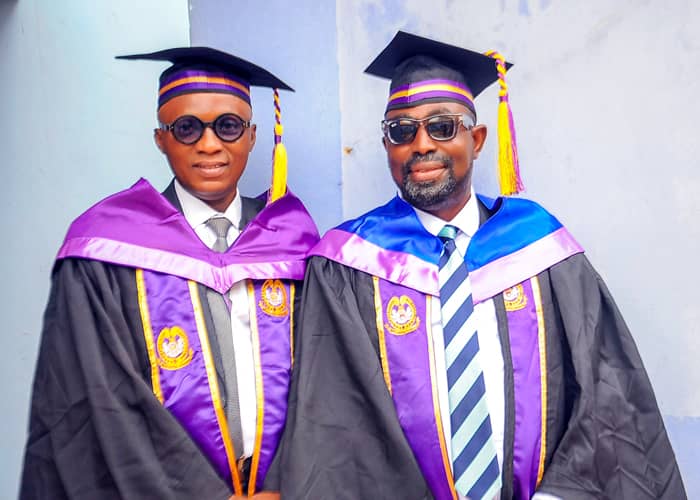
Otunba Dare Odufowokan, Senior Special Assistant on Public Communication to Ogun State Governor, Prince Dapo Abiodun, has demonstrated that the pursuit of academic excellence has no age limit after earning a First Class degree in Mass Communication from Chrisland University, Abeokuta, three decades after his first admission into a Higher Institution.
In an inspiring academic and family story, the seasoned Journalist and Public Communication expert returned to the classroom alongside two of his children, who are also undergraduate students at the same Institution, turning his quest for further education into a remarkable family experience.
His achievement, which came during Chrisland University’s eighth convocation ceremony in 2026, has drawn attention to the importance of lifelong learning, determination and the willingness to pursue personal development regardless of age, professional accomplishments or family responsibilities.
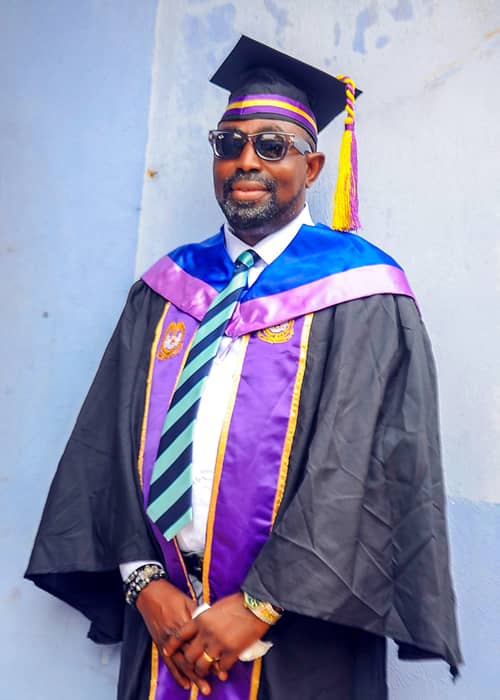
For Odufowokan, the First Class degree represents more than another academic qualification. It is a reaffirmation of his commitment to intellectual growth, professional excellence and the continuous acquisition of knowledge.
The Governor ‘s aide distinguished himself among the graduating students of the Department of Mass Communication, achieving the academic feat more than 20 years after completing his Postgraduate Studies at Bayero University, Kano.
Perhaps the most intriguing aspect of his academic journey is that he returned to University life while two of his children were also pursuing their undergraduate studies at Chrisland University.
The unusual arrangement brought different generations of learners together within the same academic environment, with a father and his children sharing the experiences, demands and excitement of University education.
Global Mirror News reports that Odufowokan’s accomplishment offers an inspiring example of how professional advancement, family responsibilities and academic ambition can coexist when driven by determination and a commitment to self-improvement.
Thirty Years After His First Admission
Odufowokan’s decision to return to school was driven by a personal philosophy that has continued to shape his professional life: the conviction that learning must remain a lifelong undertaking.
Speaking on the sidelines of the convocation ceremony alongside other First Class graduates, the Governor ‘s aide attributed his academic success to determination, hard work and an enduring appetite for knowledge.
He explained that his desire to discover new ideas, explore different approaches to familiar challenges and understand changing worldviews influenced his decision to return to the classroom after a long absence.
“I love learning new things; new ways of doing things and new worldviews, especially in my chosen fields. This is why I returned to the classroom exactly 30 years after my first admission and over 20 years after I graduated from the Bayero University Postgraduate School,” he said.
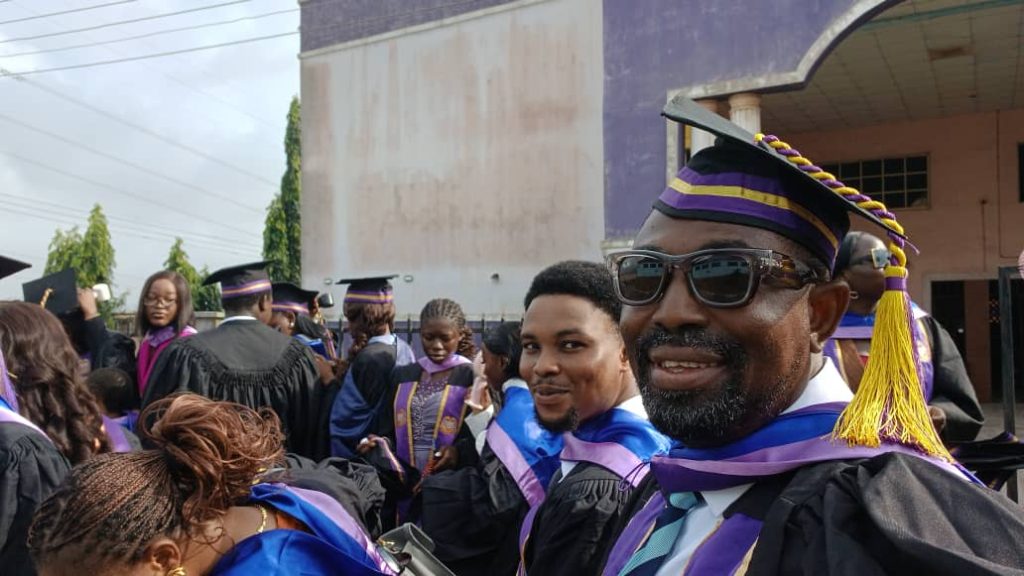
His statement captures the thinking of a professional who understands that the Media and Communication landscape is constantly evolving.
Journalism, Public Relations, Political Communication and Strategic Media engagement have undergone significant changes over the years, particularly with the emergence of digital platforms, social media, data-driven Communication and new approaches to public perception management.
For professionals operating in these fields, remaining relevant requires more than relying on years of experience. It demands the willingness to question established practices, acquire new competencies and adapt to changing circumstances.
Odufowokan’s return to University therefore reflects a deliberate effort to strengthen his intellectual capacity and deepen his understanding of a profession in which knowledge, creativity and adaptability are indispensable.
His First Class achievement is a testament to the fact that professional experience does not have to diminish the appetite for academic excellence. Instead, when combined with discipline and a willingness to learn, it can provide a strong foundation for outstanding academic performance.
When Father and Children Share the University Experience
Beyond the First Class result, Odufowokan’s experience at Chrisland University carries an unusual family dimension.
While pursuing his degree, he shared the university environment with two of his children, both of whom are currently undergraduates at the institution.
The arrangement offered a rare opportunity for a parent and his children to experience university life simultaneously, albeit at different stages of their academic journeys.
For the children, having a father who was also a student provided a practical demonstration that education is not restricted to a particular age group or stage of life.
For the father, it was an opportunity to appreciate university education from a fresh perspective while sharing the learning environment with the younger generation.
In a society where educational pursuits are often considered primarily the responsibility of young people, Odufowokan’s experience offers a different narrative.
It reinforces the message that the desire for knowledge should not diminish with age, professional advancement or family responsibilities.
His decision to return to school also sends a message to young people who may be tempted to regard academic qualifications as sufficient preparation for lifelong success.
Education, in this context, is not merely a means of securing employment. It is an ongoing process of intellectual renewal, self-discovery and personal improvement.
Odufowokan’s achievement demonstrates that a person can occupy a position of responsibility, raise a family, contribute to public life and still make room for further education.
It also provides an encouraging example for professionals who may have postponed their academic ambitions because of career demands, financial constraints or family commitments.
His journey suggests that while the circumstances of life may change, the opportunity to learn and improve oneself remains worth pursuing.
A Rewarding Experience at Chrisland University
Reflecting on his time at the institution, Odufowokan described his experience at Chrisland University as exceptionally rewarding.
He commended the academic staff, the learning environment and the university’s academic schedules, noting that the experience exposed him to new ideas and approaches.
“All in all, my experience at Chrisland was incredibly great. Fantastic academic staff, nice studying environment and studious work schedules. I learnt a lot of new things and I will love to continue learning,” he said.
His remarks underscore the importance of a supportive academic environment in helping students achieve their potential.
For an experienced professional returning to formal education after several years, the opportunity to interact with lecturers, engage with contemporary academic literature and exchange ideas with younger students can be particularly enriching.
Such interactions can also create a productive meeting point between professional experience and academic theory.
In Odufowokan’s case, his years in journalism and public communication would have provided practical perspectives on many of the issues examined in the classroom, while academic engagement offered an opportunity to interrogate professional practices through established communication theories and research methods.
The relationship between theory and practice is especially important in Mass Communication, a discipline that continues to respond to changes in technology, audience behaviour, political engagement and the flow of information.
His achievement consequently represents not just a personal academic milestone but also an illustration of the value of continuous professional development in the communication industry.
Academic Excellence in a Competitive Environment
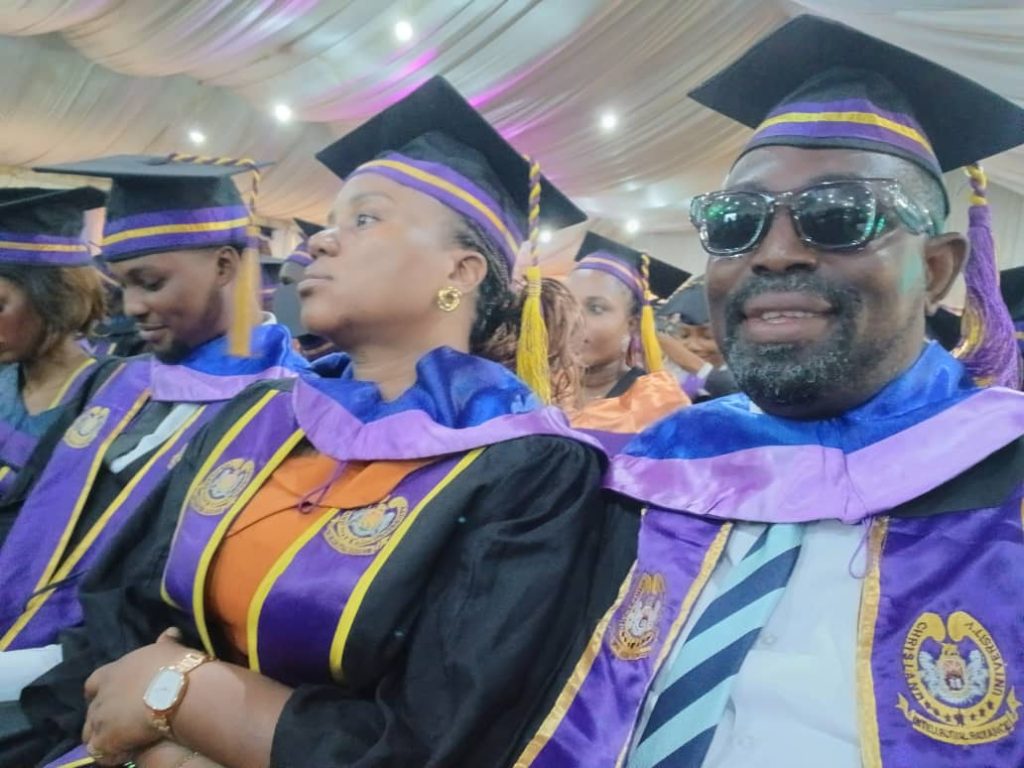
Odufowokan’s achievement came during Chrisland University’s eighth convocation ceremony, an event that celebrated the academic accomplishments of graduates while highlighting the institution’s development.
Delivering the convocation lecture, titled “Beyond the Degree: Next Generation Leadership, Innovation and Impact in a Changing World,” the Minister of State for Health and Social Welfare, Dr Iziaq Salako, challenged graduates to look beyond the certificates they had earned.
Salako maintained that academic qualifications alone would not determine how far graduates could progress in their careers.
He urged them to develop relevant skills, cultivate integrity, build global networks and focus on solving problems rather than concentrating exclusively on securing employment.
The Minister also encouraged the graduates to maintain meaningful connections with Nigeria and the institutions that contributed to their development, regardless of where their professional journeys might lead.
The message was particularly relevant in a world where employers and institutions increasingly value adaptability, problem-solving abilities, innovation and ethical conduct alongside formal qualifications.
For Odufowokan, whose professional responsibilities revolve around communication and public engagement, these qualities are essential to navigating an environment in which public trust, information accuracy and effective engagement remain important.
According to the University’s Vice-Chancellor, Professor Oyedunni Arulogun, 53 students graduated with First Class honours among 281 graduates from the institution’s regular undergraduate programmes.
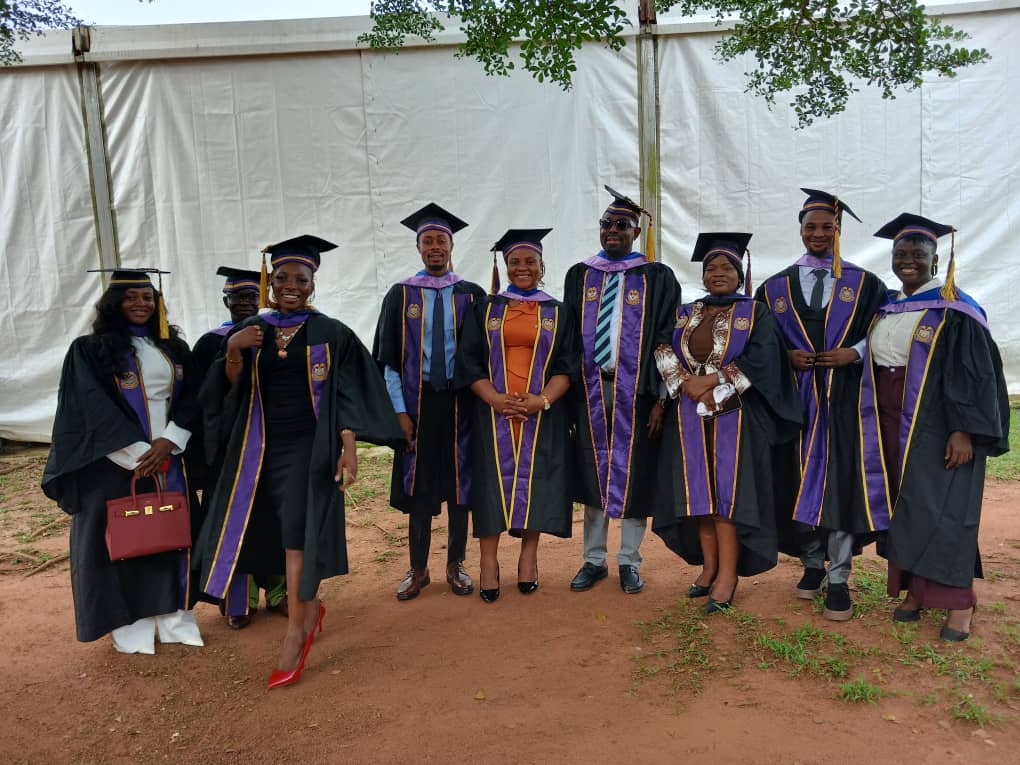
Another 43 students graduated through the Centre for Distance Learning and Executive Programmes, bringing the total number of first-degree graduates to 324.
Arulogun also disclosed that all 23 academic programmes presented for accreditation during the 2025/2026 academic session were successful.
She highlighted the university’s performance in professional examinations and the graduation of its first set of Postgraduate Diploma students.
The Chancellor, Dr Winifred Awosika, charged the graduates to uphold the institution’s motto, “Intellectual Radiance, Moral Integrity, and Academic Excellence,” and remain worthy ambassadors of the university.
She urged them to contribute meaningfully to society, maintain ties with their alma mater and demonstrate integrity and discipline in their personal and professional lives.
Against this backdrop, Odufowokan’s First Class result places him among a select group of graduates whose academic accomplishments stood out at the institution’s 2026 convocation.
From Journalism to Public Communication
Odufowokan’s latest academic accomplishment adds another chapter to a career that has traversed journalism, media relations, image management and public communication.
An alumnus of Moshood Abiola Polytechnic, Abeokuta, and Bayero University, Kano, he has built professional experience in communicating public issues and engaging audiences across different platforms.
His current position as Senior Special Assistant on Public Communication to Governor Dapo Abiodun places him within the administration’s public-facing communication structure, where the presentation of information, engagement with the media and effective communication of government activities are important responsibilities.
In contemporary governance, public communication extends beyond the routine dissemination of information.
It involves explaining policies, providing context for government decisions, communicating development initiatives and facilitating engagement between public institutions and the people they serve.
It also requires an understanding of how information travels across traditional media, digital platforms and social networks, where public perceptions can be shaped rapidly by both verified information and unsubstantiated claims.
For a communication professional in public service, continuous learning can therefore be an important tool for improving professional judgement and effectiveness.
Odufowokan’s academic achievement comes at a time when the communication profession increasingly demands a combination of practical experience, analytical ability, technological awareness and a sound understanding of audience behaviour.
His decision to return to the classroom after decades in the profession suggests that he sees education not as a chapter that ended with his earlier qualifications but as an ongoing investment in his capacity to contribute.
Beyond his government appointment, Odufowokan also serves as Chairman of the Public Communications Committee of the Ogun State APC Campaign Council.
The responsibility places him within the party’s campaign communication structure, where strategic messaging, media engagement, public information and the coordination of communication activities are central to the committee’s mandate.
The combination of his professional experience and renewed academic grounding provides an additional dimension to his work in public communication and political media engagement.
A New Academic Laurel Amid Traditional Recognition
Interestingly, Odufowokan’s First Class achievement comes amid a period of significant personal recognition and expanding public responsibilities.

On his 50th birthday, he received two traditional chieftaincy titles: Mayegun of Iraye Remo Kingdom and Otunba Onigegewura of Eposo Remo town.
The titles represent distinct forms of recognition within the traditional institutions and communities that conferred them.
For Odufowokan, the honours add to a profile that brings together professional communication, public service, political participation and community engagement.
The coincidence of his academic success and traditional recognition also presents an interesting picture of a man pursuing different dimensions of personal development and public responsibility.
While the chieftaincy titles reflect the confidence and recognition associated with traditional institutions, the First Class degree represents the outcome of sustained academic effort and personal discipline.
His appointment as Chairman of the Public Communications Committee of the Ogun State APC Campaign Council further underscores his involvement in political organisation and communication.
Taken together, these milestones reflect different aspects of his public life: the professional, the scholar, the political communicator and the traditional titleholder.
Yet, beyond the honours and appointments, his return to the classroom may prove to be one of the most instructive aspects of his journey, particularly for those who believe that professional advancement should be accompanied by continuous intellectual growth.
The Lessons in Odufowokan’s Journey
There are several lessons to draw from Odufowokan’s decision to pursue a First Class degree at this stage of his life.
The first is the importance of determination. Returning to formal education after decades of professional activity requires a willingness to readjust one’s routine, meet academic expectations and balance competing responsibilities.
The second is the value of humility. Irrespective of professional status, academic history or public recognition, the willingness to sit in a classroom and learn from lecturers and fellow students reflects an understanding that knowledge is never exhausted.
The third is the importance of leading by example. By sharing the university environment with two of his children, Odufowokan demonstrated that learning can be a family value rather than an obligation imposed only on younger members of a household.
The fourth is the need for continuous professional development. In a rapidly changing communication environment, the ability to learn, unlearn and relearn is increasingly important for anyone seeking to remain effective.
Finally, his experience challenges the notion that age or professional seniority should become a barrier to academic ambition.
His story is a reminder that people can return to unfinished goals, pursue new interests and achieve fresh milestones even after years of building careers and raising families.
For aspiring journalists, communication practitioners and other professionals, the example is straightforward: experience is valuable, but the determination to keep learning can make it even more valuable.
A Journey Still in Progress
For Odufowokan, the First Class degree may be a major milestone, but his own words suggest that he does not regard it as the end of his academic journey.
His declaration that he would love to continue learning offers a fitting conclusion to a story defined by curiosity, determination and a willingness to embrace new challenges.
From his early education at Moshood Abiola Polytechnic to his postgraduate experience at Bayero University, Kano, and now his First Class achievement at Chrisland University, his academic journey has unfolded across different stages of his personal and professional development.
The latest accomplishment is particularly significant because it came at a time when he was already engaged in public service, political communication and family responsibilities.
That he achieved it while sharing the university environment with two of his children makes the story even more compelling.
For a man who has spent years working with information, public perception and communication, the return to formal education appears to have been driven by a simple but powerful conviction: there is always something new to learn.
And if Odufowokan’s latest achievement is any indication, the classroom remains an important part of his continuing journey.
His story ultimately transcends the award of a First Class degree. It is about the courage to begin again, the discipline to pursue excellence and the understanding that education is a lifelong investment.
Thirty years after his first admission into a higher institution, and more than two decades after his postgraduate studies at Bayero University, the Ogun State governor’s aide has offered a practical demonstration that the pursuit of knowledge has no expiry date.
In doing so, he has earned not only another academic qualification but also a place among the inspiring examples of professionals who continue to challenge themselves long after conventional expectations might suggest that they have achieved enough.
Global Mirror News observes that Odufowokan’s experience is a compelling reminder to parents, young people and professionals that education should never be treated as a destination. Rather, it is a lifelong journey whose rewards extend beyond certificates to personal growth, professional relevance and the ability to inspire others.