

Nigeria records 22,000 new HIV infections among children yearly — Prof. Okonkwo
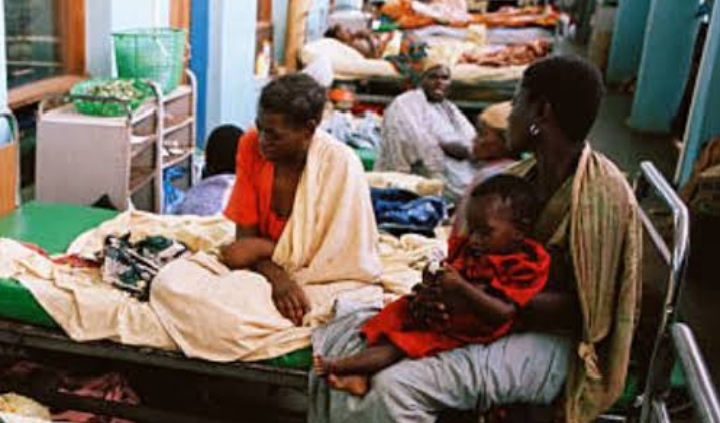
Nigeria records an estimated 22,000 new HIV infections among children annually, with about 160,000 children aged zero to 14 years currently living with the virus, a Professor of Infectious Disease Epidemiology at Bingham University, Prosper Okonkwo, has disclosed.
Okonkwo also revealed that approximately 15,000 AIDS-related deaths among children were recorded within a single year, warning that the figures underscore the urgent need for Nigeria to strengthen its response to HIV/AIDS, particularly among children and other vulnerable groups.
The Professor made the disclosure in Abuja on Thursday, August 27, while delivering the 14th inaugural lecture of Bingham University titled “Beyond Molecules: From Science to Sustainable Impact in Nigeria’s HIV Response.”
He said Nigeria had made significant progress in the fight against HIV over the past two decades through scientific innovation, antiretroviral treatment, laboratory development and other public health interventions.
However, he warned that many of the gains could be threatened if the country continues to rely heavily on international donor funding to sustain its HIV programmes.
According to him, Nigeria must urgently develop a sustainable, nationally owned HIV response system capable of maintaining critical services and infrastructure irrespective of changes in international funding priorities.
Okonkwo particularly drew attention to laboratories and other biomedical facilities established or strengthened during Nigeria’s HIV response, saying the infrastructure had subsequently proved valuable beyond HIV/AIDS.
He recalled that laboratories developed through the HIV programme became central to Nigeria’s response to the COVID-19 pandemic when the country was confronted with a new public health emergency.
«“The laboratories we built for HIV became the backbone of Nigeria’s COVID-19 response when nothing else was ready,” he said.»
The Don therefore called on the Federal Government to formally classify such infrastructure as national health security assets, backed by sustainable financing and appropriate governance structures.
He argued that doing so would ensure that the facilities remain operational and available whenever Nigeria faces another major infectious disease outbreak or public health emergency.
Nigeria must reduce dependence on donor funding
The Professor acknowledged that advances in molecular science, vaccine research and antiretroviral therapies had transformed HIV from what was once largely considered a fatal condition into a manageable disease for people who have access to effective treatment.
However, he stressed that scientific breakthroughs alone would not eliminate HIV in Nigeria.
According to him, socio-economic conditions, cultural practices, stigma, poverty and other social barriers continue to influence prevention, testing, treatment adherence and retention in care.
He said Nigeria’s HIV response must therefore move beyond the availability of medicines to address the realities that determine whether people can access treatment and remain on it.
Okonkwo also advocated the full integration of HIV services into Nigeria’s health insurance system, arguing that access to life-saving treatment should not depend predominantly on donor commitments or discretionary government budget allocations.
He cited Vietnam, Thailand and Rwanda as examples of Countries that had strengthened domestic financing for HIV services by integrating treatment into national health insurance and related systems.
The Professor noted that Nigeria already had the institutional structure needed to pursue a similar approach through the National Health Insurance Authority (NHIA) and various state health insurance schemes.
He said about 21.7 million Nigerians are currently enrolled in health insurance, while the country has set a target of reaching 50 million enrollees by 2027.
“I recommend that HIV services be written into that benefit package as policy, with subsidised premiums and a published, multi-year timetable, not left as a discretionary line item that can quietly disappear when budgets tighten,” he said.
Professor seeks stronger paediatric HIV response
Okonkwo further called for increased investment in paediatric HIV treatment, prevention of mother-to-child transmission and early infant diagnosis.
He disclosed that Nigeria had recorded progress in the proportion of children who require antiretroviral therapy and are actually receiving treatment.
According to him, coverage increased from 29 per cent before the country’s deliberate national push to 74 per cent by 2024.
He described the improvement as significant but cautioned that the progress should not be interpreted as the end of the challenge.
Instead, he urged policymakers to build on the achievement by ensuring that more children living with HIV are diagnosed early and placed on effective treatment.
He also stressed the importance of preventing new infections among children, particularly through stronger prevention of mother-to-child transmission programmes.
Trust, not just proximity, needed in HIV care
The Professor argued that the success of HIV services should not be measured solely by the physical proximity of health facilities to patients.
According to him, trust is a major factor in determining whether people will initiate and remain in treatment.
He said community-based approaches had generally improved retention in HIV care, but warned that simply bringing services closer to patients would not automatically guarantee continued treatment.
Okonkwo called for differentiated service delivery models that take into consideration the different needs of adolescents, women, older people, key populations and Nigerians living in poverty.
He also identified stigma and legal and social barriers as factors that could discourage people from seeking HIV testing, treatment and other forms of support.
Government urged to strengthen existing programmes
The inaugural lecturer urged the Government to concentrate on completing, funding and strengthening programmes and policies that are already in place instead of continuously introducing new initiatives.
He noted that Nigeria had already established a policy direction for integrating HIV services into primary healthcare and had begun transitioning some large-scale programmes from international organisations to Nigerian implementing partners.
He also pointed to pilot programmes that have combined HIV care with services such as hypertension management, mental health and reproductive health.
According to him, such integration could strengthen Nigeria’s wider healthcare system while reducing fragmentation and making services more accessible to patients.
Okonkwo said the recommendations contained in his lecture were not experimental ideas, stressing that many had already been tested and demonstrated to work either in Nigeria or other countries.
«“What is missing is not knowledge. It is the will to act on what we already know,” he said.»
Bingham University VC calls for multidimensional HIV response
Earlier, the Vice-Chancellor of Bingham University, Professor Haruna Ayuba, said Nigeria’s battle against HIV/AIDS could not be won through scientific breakthroughs alone.
Ayuba called for a multidimensional strategy combining scientific research with policy reform, public education, community engagement and stronger health systems.
He said the objective should be to translate scientific discoveries into accessible diagnostic services and affordable treatment options that respond to Nigeria’s specific circumstances.
The Vice-Chancellor also disclosed that the University’s College of Medical Sciences currently leads its academic rankings with five inaugural professors.
He said the Faculty of Social Sciences has three inaugural professors, while the Faculty of Administration and Faculty of Science and Technology have two each.
Environmental Science and Law, he added, each have one inaugural professor.
Ayuba described the development as an indication of the university’s growing academic strength, while urging other faculties to increase their contributions to research and scholarship.
NACA, UNILAG hail inaugural lecture
In separate goodwill messages, the Vice-Chancellor of the University of Lagos, Professor Folasade Ogunsola, and the Director-General of the National Agency for the Control of AIDS (NACA), Dr Temitope Ilori, commended Okonkwo for the lecture.
They described the presentation as timely and insightful, noting its relevance to Nigeria’s continuing efforts to control HIV/AIDS and strengthen the country’s capacity to respond to infectious diseases.
Global Mirror News gathered that the concerns raised at the lecture come at a critical period for Nigeria’s HIV response, as the country seeks to sustain progress in treatment and prevention while increasing domestic ownership and reducing vulnerability to shifts in international health financing.
The lecture also highlighted the need for Nigeria to treat HIV investment not merely as a disease-specific intervention but as part of a broader strategy for strengthening national health security and building a resilient healthcare system.