
‘I Was Fighting for Nigeria, Not Power’- Coup Suspect Ma’aji Breaks Silence, Seeks Pardon
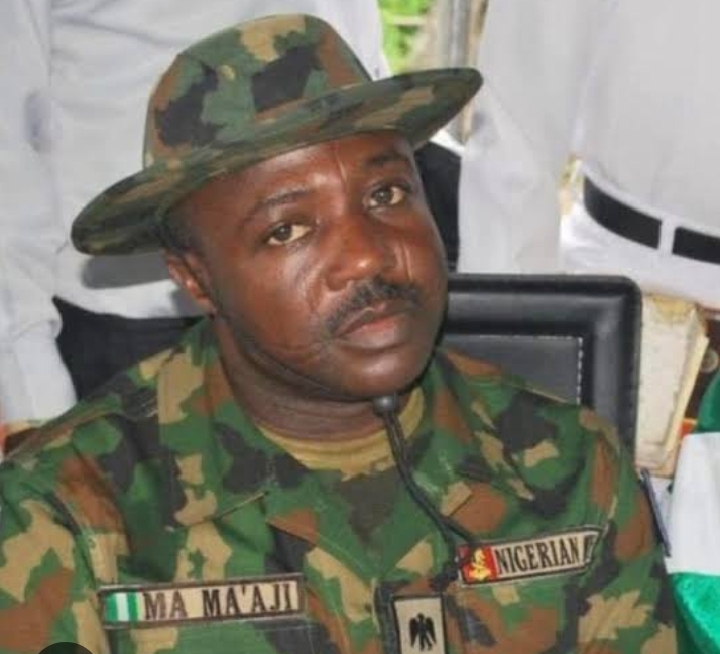
Colonel Mohammed Ma’aji, the Nigerian Army Officer accused of playing a leading role in an alleged plot to overthrow President Bola Ahmed Tinubu’s administration, has broken his silence on the controversial case, insisting that his actions were motivated by patriotism, frustration and a desire to rescue Nigeria from what he considered worsening conditions.
Ma’aji, who made the disclosure during proceedings connected with the alleged coup plot, reportedly maintained that he was not driven by personal ambition or a quest for political power, but by concerns over economic hardship, insecurity, poor governance and the deteriorating welfare of Nigerians and Military personnel.
Global Mirror News gathered that the Colonel’s account formed part of fresh revelations surrounding the alleged plot, which was uncovered in September 2025 and subsequently triggered arrests, investigations and significant changes within Nigeria’s military hierarchy.
According to Ma’aji, the circumstances that allegedly pushed him and others towards the plan had developed over time as he watched what he described as a gradual decline in the Country.
He reportedly told investigators and the panel handling the matter that his motivation was rooted in his love for Nigeria and the Military profession.
«“What has happened is driven by patriotism. I love the job and the country.”»
Ma’aji further explained that his concerns were not limited to the general economic situation but also extended to the condition of serving soldiers, particularly personnel who had sustained injuries while defending the country.
‘I Could Barely Take Care of My Five Children’
The Army Officer reportedly cited his own financial difficulties as another indication of what he considered the worsening welfare situation in the country.
As a father of five, Ma’aji said his salary had become increasingly inadequate to meet his family responsibilities, a situation he linked to broader concerns about the welfare of Military personnel.
He also raised concerns about the treatment of wounded soldiers, alleging that some injured personnel receiving medical attention at the 44 Nigerian Army Reference Hospital in Kaduna were not receiving adequate care.
For Ma’aji, the alleged shortcomings went beyond individual hardship, raising questions about the welfare and morale of Soldiers who risk their lives in the service of the Nation.
‘There Was No D-Day’
In another significant aspect of his account, Ma’aji reportedly insisted that the alleged plot had not reached the stage of execution when he was arrested.
He said Officers were still being mobilised around shared concerns and that the group had not completed its recruitment or secured all the resources it allegedly needed.
“There was no D-Day,” he reportedly said, explaining that further meetings were still expected to take place and that the team itself had not been fully constituted.
The claim is significant because earlier accounts surrounding the case had alleged that the conspirators were working towards a coordinated effort to seize control of critical Government and Military installations.
Funding Claims Emerge
Ma’aji also reportedly claimed that he personally financed a substantial part of the alleged operation, while former Bayelsa State Governor Timipre Sylva contributed about N400 million.
He denied any foreign involvement in the alleged scheme.
However, previous investigative reports have contained different allegations concerning the financing of the purported plot. One report had alleged that investigators traced hundreds of millions of Naira to individuals suspected of bankrolling the conspiracy. These claims remain matters connected to the ongoing legal proceedings and should not be treated as established facts against any accused person.
Promotion Frustration, Soldiers’ Welfare
Ma’aji reportedly linked his dissatisfaction to issues surrounding Military welfare and what he described as unsuccessful attempts at promotion.
He advocated the creation of a formal and protected channel through which Soldiers could communicate their grievances directly to the Chief of Army Staff without fear of victimisation.
Among the reforms he reportedly proposed were improved salaries and welfare packages for Military personnel, better pension arrangements, educational support for Soldiers and their families, and stronger measures to tackle corruption within Government and the armed forces.
He also criticised the removal of the fuel subsidy, arguing that the policy should have been implemented gradually rather than abruptly.
‘Give Us Another Chance’
With the alleged coup case now before the courts, Ma’aji reportedly appealed to the authorities for leniency, describing himself and the other accused persons as first offenders.
He said his arrest and subsequent interaction with investigators had forced him to reconsider his approach, adding that the experience had changed the mindset of those involved.
The Colonel maintained that the alleged action was not intended to destabilise Nigeria, but was born out of a desire for what he considered a more prosperous and secure nation.
He appealed to the authorities to pardon the accused Officers and allow them an opportunity to “mend their ways.”
How the Alleged Plot Unfolded
The alleged coup plot became public after Security Agencies reportedly uncovered plans in September 2025 involving serving and Retired Military Officers and civilians.
The development generated widespread concern because Nigeria has a long and painful history of Military interventions in governance, although the Country has remained under democratic rule since the return to civilian Government in 1999.
The alleged plot also had immediate consequences within the Military establishment, with the October 1, 2025 Independence Day parade cancelled amid Security concerns and changes subsequently made to the Military hierarchy.
Christopher Musa, who was then Chief of Army Staff, was removed from the position and later appointed Minister of Defence. Musa has since rejected any suggestion that he was connected to the alleged conspiracy and has argued that Military rule is not an alternative to democracy.
Earlier proceedings in the case have also produced other revelations. A Federal High Court in Abuja heard testimony from witnesses concerning alleged attempts to penetrate security around the Presidential Villa, while an Islamic cleric, Sheikh Sani Abdulkadir, previously told investigators that he had warned persons allegedly connected with the plot that the operation would fail.
Global Mirror News reports that despite Ma’aji’s latest explanation that his motivation was patriotism rather than ambition, the allegations against him remain subject to judicial determination. His claims about the motive, financing, extent and intended execution of the alleged plot will ultimately have to be weighed alongside evidence presented by the prosecution and the defence.
For now, the controversy has reopened a wider National conversation about Military welfare, economic hardship, governance, insecurity and the limits of dissent within a constitutional democracy.
While Ma’aji says he acted because he feared Nigeria was heading towards a point where the country could no longer be salvaged through conventional means, the legal proceedings will determine whether his account amounts to justification—or whether the allegations constitute a serious attempt to undermine Nigeria’s democratic order.