
‘We Slept in the Rain, Our Clothes Dried on Our Bodies’, Kwara Abductee Recalls Six Months of Hell
For more than six months, the meaning of home was reduced to a memory for Fatima Mohammed.
Home was where her family was. Home was where she could sleep without fear, change into clean clothes, eat without knowing when the next meal would come and wake up without wondering whether she would live to see another day.
But after she was taken captive in Kwara State, those simple things became distant luxuries.
Mohammed has now emerged from the ordeal with a story that exposes the human misery hidden behind Nigeria’s growing kidnapping crisis, a story of rain-soaked clothes, hunger, exhaustion, fear and an agonising wait for freedom.
She reportedly spent six months and two weeks in captivity before her rescue.
And when the rain came in the forest, there was nowhere to run.
The captives slept in the open, exposed to the elements. Their clothes became soaked, but there were no spare clothes to change into.
Mohammed recalled that their wet clothes eventually dried on their bodies because they had nothing else to wear.
It was not simply discomfort. It was a daily reminder that they had been stripped of the most basic necessities of normal life.
For six months, the forest became a prison without walls, and the possibility of returning to their families became the hope that kept many of them going.
‘Please, this is our last opportunity’
Mohammed’s account is not the first desperate testimony to emerge from the captivity of the Woro abductees.
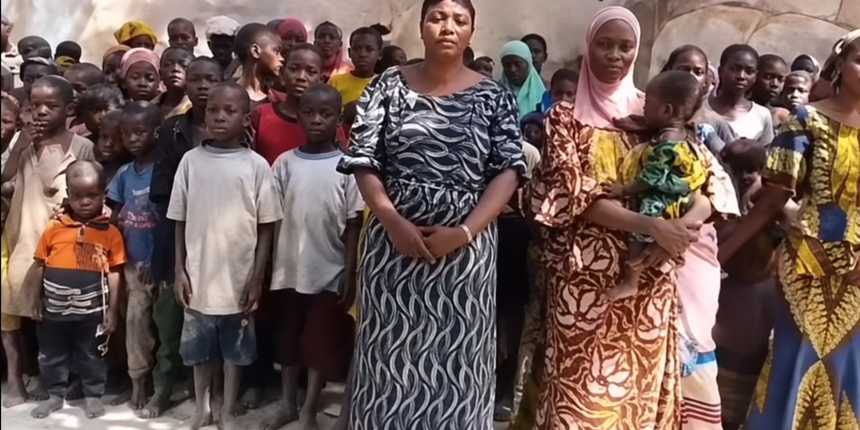
Months earlier, other victims appeared in videos released by their captors, pleading with the Federal Government and the Kwara State Government to rescue them.
In one of the most disturbing appeals, a female captive identified herself as one of those taken from Woro, Kaiama Local Government Area, and reminded Nigerians that they had been held since February 3, 2026.
“Please, we are begging you, this is the last opportunity they gave us,” she pleaded.
Her voice carried a particularly painful message: the captives were not alone.
There were small children and pregnant women among them.
She also spoke of people suffering from anaemia and appealed to the authorities to act before it was too late.
Another female captive, speaking in Yoruba, similarly pleaded with the governments of Kwara and Oyo States.
She said the captors were feeding them and teaching them religious teachings, but insisted that they desperately needed help.
Other captives speaking in Nupe also joined the appeal, repeatedly calling on the authorities to intervene and secure their freedom.
Their statements painted a picture of people who were physically alive but psychologically trapped between hope and fear.
From a community attack to a mass abduction
The tragedy began on February 3, 2026, when heavily armed attackers invaded Woro and neighbouring Nuku communities in Kaiama Local Government Area of Kwara State.
The assault was among the deadliest security incidents recorded in the area this year.
Reports at the time indicated that residents were attacked with firearms, homes and shops were set ablaze, and people fled into surrounding bushes in desperate attempts to escape.
Casualty figures varied across reports, but community sources and subsequent accounts put the number of people killed at well over 100, with some reports placing the death toll above 200.
Women, children and other residents were taken away into the forest.
The number of abductees also became a source of controversy.
While early Government accounts gave lower figures, a video later released by the terrorists showed a large group of captives and triggered renewed concerns over the actual number of people being held.
Community representatives subsequently put the figure at about 176 women and children, although authorities repeatedly cautioned that the exact number had not been definitively established because some people initially reported missing had later reunited with their families or relocated to neighbouring communities.
Six months of uncertainty for families
For families back home, the ordeal did not end with the initial attack.
It simply changed form.
Instead of running from gunmen, relatives were left counting days, weeks and eventually months without knowing whether their loved ones were alive, sick, hungry or in danger.
In July, residents and community groups staged protests in Kaiama, saying the victims had been in captivity for more than 170 days.
They carried placards demanding urgent action and appealed to President Bola Tinubu, the Kwara State Government and security agencies to rescue their relatives.
The Village Head of Woro, Umar Salihu, described the prolonged captivity as unbearable.
He said mothers had been separated from their children, husbands from their wives, while families continued to live with fear and uncertainty.
That uncertainty became even more painful as videos of the captives surfaced.
Terrorists threaten captives with death, forced marriage
The situation took another frightening turn in April when the terrorists reportedly threatened to execute some of the captives if their demands were not met.
According to community sources, the terrorists were demanding more than N3 billion for the release of the victims.
The captors reportedly complained about the cost of feeding the abductees and threatened to marry off some of the girls while killing those they considered liabilities if an agreement was not reached.
For parents and relatives, the threat was devastating.
They were not simply waiting for kidnapped loved ones to come home; they were waiting under the fear that their children, wives and relatives could be killed or subjected to forced marriage.
One community source described the helplessness of families whose wives and children were being threatened.
The terrorists’ own chilling claim
In one of the videos, an armed man claimed responsibility for the Woro abduction and said the captives had been “indoctrinated”.
He claimed the group had changed the victims’ way of life and said the captives had been allowed to speak as a final opportunity to appeal to the Government.
The claims could not independently be verified, and they came from the same armed group holding the victims.
But the footage nevertheless gave anxious relatives one thing they desperately needed — evidence that some of their loved ones were still alive.
Mohammed’s return: joy after months of darkness
Against that grim background, Mohammed’s emergence from captivity carries a significance that goes beyond her individual story.
After spending months away from home, she can finally look forward to seeing the people whose faces she had carried in her memory throughout the ordeal.
Her happiness at the prospect of family reunion is understandable.
After six months and two weeks of uncertainty, home is no longer just a place — it is freedom, safety and the embrace of loved ones.
Another survivor, 17-year-old Isyaka Ahmed, also recounted the terror he experienced.
Ahmed said he attempted to escape but was discovered and threatened with death.
His experience captures the desperate choice facing captives: remain in the hands of armed men or risk being killed while trying to escape.
He also spoke about hunger and the hardships endured in captivity.
But even after his own freedom, his heart could not completely settle.
He reportedly revealed that some boys were still being held by the terrorists.
So while one family celebrates the return of a son, another may still be staring at an empty doorway.
The bigger crisis beyond Woro
As Global Mirror News gathered, the Woro tragedy is part of a broader security crisis affecting Kwara North, particularly Kaiama and Baruten Local Government Areas.
Community organisations have reported repeated attacks in areas including Tungan Maje, Kemanji, Tungan Aboki, Karonji, Sekugbe, Kenugbe and Yashikira.
The Emir of Yashikira’s palace was also reportedly attacked, with members of the monarch’s family abducted.
Community leaders have raised concerns about armed groups operating around the Borgu Game Reserve, which straddles the wider border region and provides difficult terrain for security operations.
The insecurity has also affected farming and livelihoods.
Residents have been forced away from their farms, while poor roads have made it more difficult for security personnel to reach affected communities quickly.
Community groups have warned that the pattern of violence is beginning to resemble the early stages of the insurgency that devastated parts of North-East Nigeria.
They have called for sustained military operations, humanitarian assistance for displaced residents, reconstruction of affected communities and urgent improvement of roads linking Kaiama and Baruten with Ilorin.
Freedom for some, prayers for others
The story of Mohammed and other rescued victims should therefore not be allowed to end with their return.
Their experiences have given Nigerians a glimpse into what prolonged captivity can mean: sleeping under the rain, wearing the same wet clothes until they dry on the body, enduring hunger and living under threats of death.
But perhaps the most painful part is knowing that not everybody has come home.
For the families still waiting, every passing day is another day of uncertainty.
Every phone call can bring either hope or heartbreak.
Every unfamiliar vehicle approaching the house can briefly create the thought that perhaps their loved one has finally returned.
And every night, many families still go to bed with the same unanswered question:
When will our own child, mother, father, husband or wife come home?
For Mohammed, freedom has finally reopened the door to home.
For those still trapped in the forests, and for the families waiting for them, the struggle continues.
Global Mirror News believes their stories must remain in the public consciousness until every victim who can be safely rescued is brought home.