
FG Gives Lagos-Calabar Coastal Highway 14 Days to Improve or Face Shutdown
The Federal Government has given motorists and other road users on the Lagos section of the Lagos-Calabar Coastal Highway a two-week ultimatum to comply with safety regulations or risk closure of the route.
The warning was issued on Monday, September 21, 2026, by the Federal Controller of Works in Lagos State, Olufemi Dare, during an inspection of the highway. The directive followed concerns raised by the Minister of Works, David Umahi, over persistent safety violations, vandalism and other illegal activities along the road.
Dare said the government could be forced to shut the Lagos section of the highway if there was no significant improvement within two weeks.
“Within two weeks, if there’s no improvement on all these issues, then we have no option than to come back and shut down this road,” Dare said.
The warning comes amid growing concerns about the safety of motorists, construction workers and other road users on the newly opened highway, where construction activities are still ongoing.
According to Dare, the highway remains a construction site and was not originally expected to carry regular traffic before the completion of major bridges and other critical infrastructure.
The Lagos portion of the coastal highway covers approximately 103 kilometres, divided into two sections of about 47km and 56km. There are 20 major bridges across the two sections, with several still under construction.
Drivers accused of ignoring 30km/h limit
One of the major concerns raised by the Federal Ministry of Works is excessive speeding.
Dare said motorists had repeatedly been warned that the maximum speed on sections of the highway where construction is taking place is 30km/h. However, some drivers were reportedly travelling at speeds of up to 120km/h.
Global Mirror News reports that the huge difference between the prescribed speed and the speeds allegedly recorded on the highway has raised concerns about the risks faced by motorists and construction workers, particularly around active bridge and road construction areas.
Dare said the government was particularly worried about the reported loss of lives along the route and warned that authorities could no longer allow the situation to continue.
Truck parking, Okada, Keke and hawking banned
The Federal Government also announced restrictions aimed at preventing activities considered dangerous or obstructive along the coastal highway.
The restrictions include truck and trailer parking, illegal U-turns, hawking, animal grazing, commercial motorcycles (Okada), tricycles (Keke), shanties and other illegal structures along the route.
Dare warned articulated vehicle operators against using portions of the highway as temporary parking areas. Reports indicate that trucks found illegally parked could be clamped and towed away.
He also warned that motorists involved in creating or using unauthorised U-turns would face prosecution.
Authorities are also moving against shanties and illegal settlements along the corridor as part of efforts to protect the road and improve traffic safety.
Vandalism raises fresh security concerns
Vandalism has emerged as another major challenge confronting the highway.
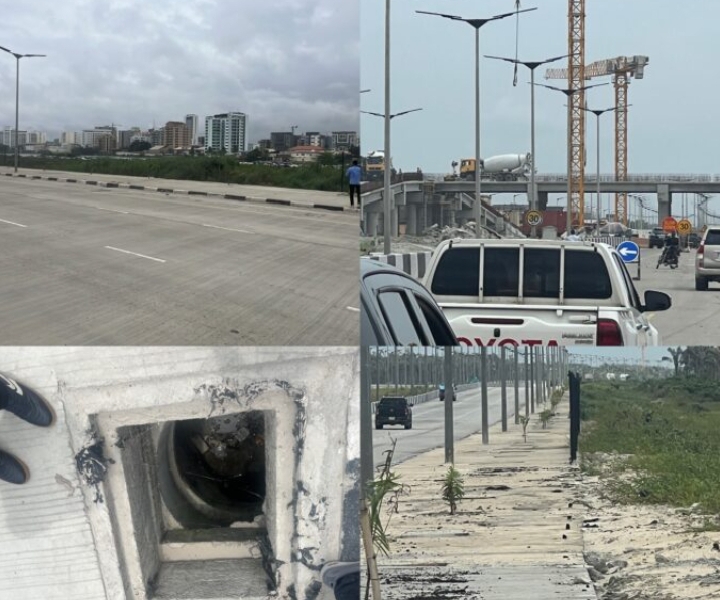
Dare said parts of the protective infrastructure installed along the route had been removed, allegedly by vandals operating at night.
According to reports from the inspection, about five kilometres of ClearVu fencing had been removed, while approximately 18 kilometres of concrete covers had also been vandalised and taken away. Another report said about 150 road signs had been removed.
Global Mirror News reports that the removal of safety infrastructure could expose motorists and nearby communities to additional risks, particularly while construction work remains active.
Police deployment increased
The Federal Government has also moved to strengthen security along the route.
Dare disclosed that the Ministry of Works had reached an agreement with the Lagos State Police Command to increase police deployment along the highway following meetings between Umahi and the state Commissioner of Police, Fatai Tijani.
He said increased police presence had already begun along the route and would be expanded.
Lekki-Epe Expressway may serve as alternative
If the coastal highway is eventually closed, the Lekki-Epe Expressway is expected to serve as an alternative route for motorists.
The possible closure could therefore affect daily movement along the Lagos corridor, particularly for commuters and businesses that have incorporated the newly opened sections into their travel routes.
For now, the Federal Government’s position is that continued access to the highway depends on improved compliance with safety rules and an end to activities that threaten the road infrastructure.
The two-week period therefore puts motorists, commercial operators, traders and other users of the Lagos-Calabar Coastal Highway under renewed pressure to comply with the prescribed rules before the government reviews the situation.